Private caregiver sought for hourly work: Flexible care

When a loved one needs help, every decision matters. Hourly private care can be the difference between overwhelm and security, between fear and calm, between standstill and a dignified everyday life at home.
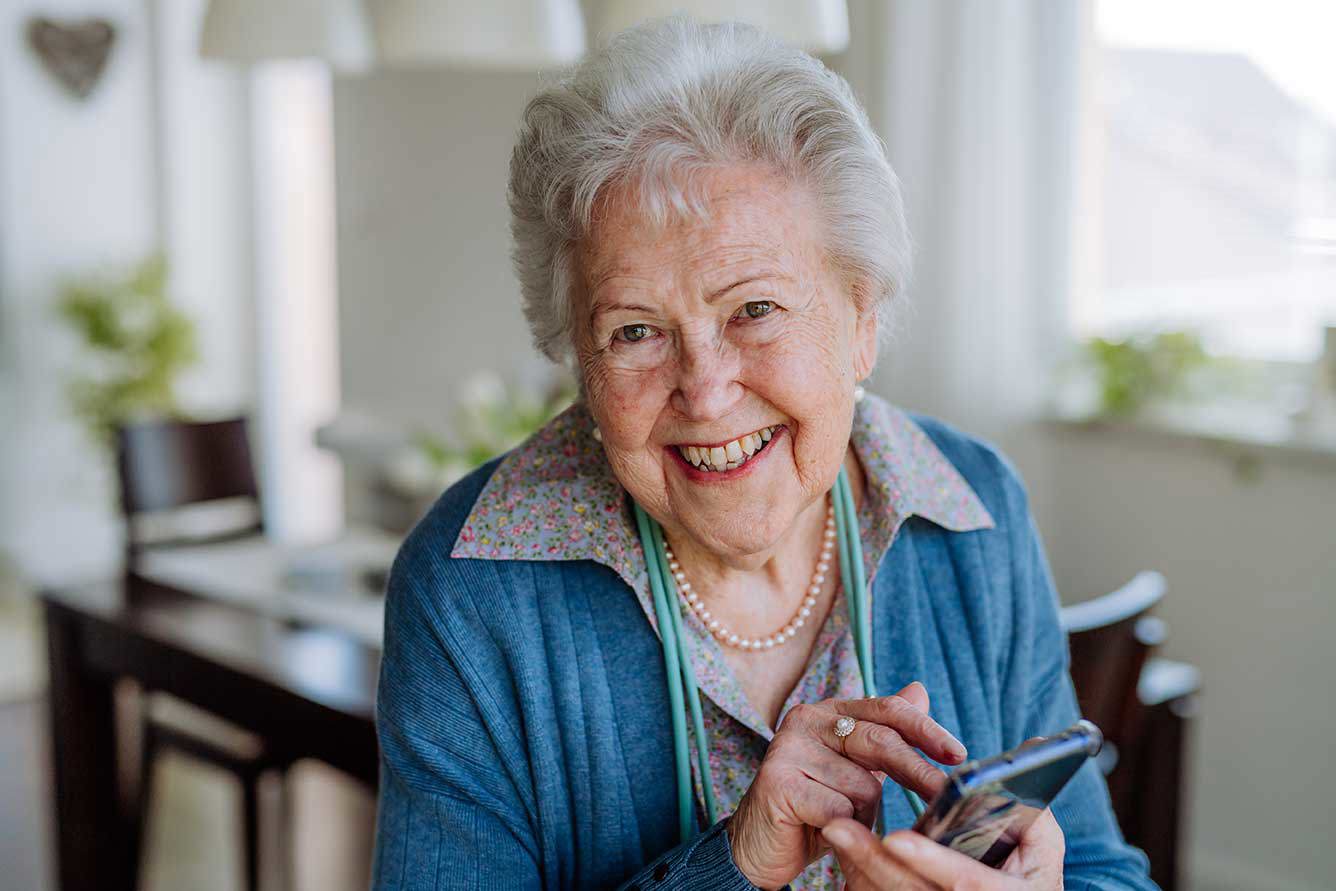
If you’re currently searching for “private caregiver wanted by the hour,” you’re probably under pressure. Maybe a parent suddenly needs support in everyday life. Maybe your own time is no longer enough. Or you want to organize help without immediately having to think about 24-hour care or a nursing home.
Many family members are in exactly this situation: you want reliable, human support—for a few hours, in your own home. And at the same time, clarity: about costs, options, and legal security.
But this is often exactly where uncertainty begins. Because the search is not only personally challenging—it has also become more difficult socially. Official figures show that support is becoming increasingly scarce: According to a recent WIFO report, Austria needs around 24,000 additional caregivers by 2030. No wonder, then, that traditional routes often lead nowhere—and more and more families are looking for new, direct solutions.
And suddenly a lot of questions come up:
- Where can you even find a private caregiver?
- What does hourly care really cost—for example for 2 or 8 hours?
- Is private care allowed?
- And what should you pay attention to so that the person really suits you?
This guide is written specifically for you. It is aimed at family members who want to quickly, responsibly, and knowledgeably find a private caregiver for hourly in-home support—especially for older people. You’ll get clear answers, concrete cost examples, practical ways to search, and honest guidance so you can make a good decision.
Without technical jargon. Without sales pressure. But with the goal of giving you security, clarity, and tangible relief—step by step.
Here you can quickly find a private caregiver—legal, transparent, and human.

A private caregiver by the hour comes to your home for a few hours a day or week and helps wherever support is needed. Not around the clock, not permanently, but on a targeted basis—flexible and practical for everyday life.
You can think of it like a helping hand that’s there exactly when it’s needed and steps back again when everyday life works well on its own.
Private caregiver, caregiver or home help — what’s the difference?
The terms sound similar, but they cover different tasks:
All three can be used by the hour. What matters is what kind of support is actually needed.
Distinction from 24-hour care and nursing home
Depending on the living situation and care needs, different forms of support may be suitable. The following overview shows the most important differences—compact, easy to understand, and at a glance.

A private hourly caregiver accompanies and supports people in need of care for a few hours a day or per week – directly in their own home. Exactly where you feel safe, where memories live, and everyday life is familiar.
Instead of a radical change such as moving to a nursing home or arranging 24-hour care, independence is maintained for as long as possible. At the same time, relatives receive noticeable relief – targeted, flexible, and tailored to individual needs.
Typical examples include:
- 2 hours of care at home, for example in the morning to help with getting up, washing, or dressing
- 4 hours of hourly care, for support in daily life, household tasks, or errands
- Up to 8 hours of private care at home, when more companionship, supervision, or safety is needed
This way, the support adapts to life – not the other way around. Hourly care means human support exactly when it is truly needed.
Hourly private care is ideal for people who need support but do not want to give up their familiar life – and for relatives who carry responsibility without wanting to overwhelm themselves.

It is particularly suitable for:
- Seniors, who want to continue living independently in their own home but need help in everyday life
- Relatives, who are employed, have families, or simply need relief without having to be constantly available
- People after a hospital or rehabilitation stay, who temporarily need support when settling back in at home
- People with emerging care needs, for whom small forms of help already make a big difference
- As a transitional solution or regular support, for example before making a major care decision or to stabilize everyday life in the long term
Hourly care fills exactly the gap between “still managing alone” and “already too much.” It provides safety, structure, and closeness without completely changing your life.
When hourly care is sufficient
Hourly care is like a gentle helper who steps in exactly when everyday life becomes tricky. It is often sufficient when a high level of independence still exists and only occasional support is needed, for example with getting up, washing, cooking, or accompanying someone to appointments.
Daily life remains self-determined, your own home stays familiar, and relatives can be specifically relieved without having to completely reorganize life.
When more care becomes necessary
More comprehensive care becomes necessary when managing everyday life becomes increasingly difficult or continuous safety is required. If someone falls regularly, can no longer reliably care for themselves, or permanent presence is required for safety, hourly care reaches its limits.
Then 24-hour care or a nursing home is the sensible solution to ensure comprehensive care and protection while minimizing the risk of overburdening relatives.
When a private caregiver comes to the home on an hourly basis, they are like a bright, reliable companion in everyday life: ensuring that both small and big steps of the day are easier to manage – without completely restructuring life.

Care & Everyday Life
A good caregiver provides support where independence is gradually becoming more difficult, but where a great deal of quality of life still remains:
- Help with dressing and undressing – like a helping hand that gently starts the morning and prepares the day
- Support with personal hygiene – with washing, brushing teeth, or using the toilet, so the day feels hygienic and dignified
- Mobilization & accompaniment – getting up, walking, or managing short distances more safely, for example from the armchair to the window or onto the balcony
This support is not clinical treatment, but practical, everyday assistance that strengthens the person in their familiar surroundings and provides security.
Household & Companionship
In addition to physical support, this often includes what makes everyday life fully worth living:
- Shopping, cooking & light housework – so the refrigerator is not empty and a warm meal enriches the day
- Doctor’s visits, walks & companionship – whether to an appointment, to the park, or simply for a good conversation over a cup of tea
These services keep everyday life running: they are like small engines that keep the day going without overwhelming anyone.
What is not included
Important to know: An hourly caregiver does not provide medical treatment care. Specifically, this means:
- No medical or physician procedures (e.g., injections, dressing changes, wound care)
- No specialized medical measures or administration of medication, that require qualified medical personnel
Medical care remains reserved for appropriately qualified nursing staff. These are activities that go beyond everyday support and require specialized expertise.
Those who choose hourly support from a private caregiver opt for flexibility and quality of life in their own home. However, while publicly funded home nursing often has long waiting lists, the private market offers immediate relief – at market-standard prices. In Austria, these costs vary depending on qualifications and the scope of care.

Average costs: What prices you should expect
The investment in private care is as individual as the needs of the person receiving care. On average, hourly rates for private caregivers in Austria usually range between 25 and 55 euros.
The most important factors influencing the price:
- Region: In metropolitan areas such as Vienna, Salzburg, or Innsbruck, rates are usually 10–20 percent higher than in rural areas.
- Qualification: A certified registered nurse (DGKP) charges significantly more due to medical expertise than a home aide or someone providing purely everyday companionship.
- Scope of tasks: Is it purely companionship and household help, or more complex care tasks (wound care, mobilization)?
- Service times: Short-notice assignments or split shifts are often more expensive per hour than longer continuous blocks.
Concrete price examples for care at home
To give you a better idea of the budget, we have calculated three typical scenarios for you (based on an average rate of 35 euros per hour):
2 hours of care at home – Cost: approx. €70
- Ideal if the day is meant to start gently: help with getting up, dressing, and morning personal hygiene. Afterwards, a shared breakfast, a short conversation – and the good feeling of starting the day well cared for.
4 hours of care at home – Cost: approx. €140
- Perfect for a structured morning or afternoon: accompaniment to the doctor, small errands, a freshly cooked lunch. At the same time, there is time to tidy up the household and have a calm conversation.
8 hours of care at home – Cost: approx. €280
- Suitable for comprehensive day care: reliable support over several hours, safety in everyday life, and time for personal attention. Especially relieving when relatives are working or simply need to take a deep breath.
Long-term planning: Weekly and monthly examples
If care becomes routine, many agencies or self-employed caregivers offer flat rates. Nevertheless, the costs add up:
Important: Watch out for the surcharges! When calculating, be sure to plan a buffer for special periods. In Austria, the following surcharges are common:
- Saturday/Sunday: +25 to +50 percent
- Public holidays: +100 percent (public holiday surcharge)
- Night shifts: Flat rates are often agreed here, which can be between 150 and 250 euros per night.
Searching for an hourly caregiver differs greatly from traditional 24-hour care. While agencies are often specialized in full-day models, for occasional assignments (e.g., 2 to 4 hours in the afternoon) you need other channels. The challenge is to find someone who is professionally qualified, a good personal fit, and legally properly covered.

Options at a glance: Where to look?
Nowadays there are four main ways to find a caregiver in Austria:
- Online platforms (such as noracares): This is the most modern way. Platforms like noracares function as an intelligent marketplace. Here you can filter specifically by qualifications (e.g. home helper or registered nurse) and availability in your region. The special thing: a matching system connects you directly with suitable caregivers, without a traditional agency in between.
- Classified ads & marketplaces: On portals like Willhaben or Facebook groups you can find many private listings. However, it takes initiative to separate the wheat from the chaff.
- Recommendations & local networks: The local grapevine in the community or recommendations from your family doctor are often worth their weight in gold, but unfortunately not plannable or available at short notice.
- Traditional agencies: Agencies handle the full organization. However, many are primarily geared toward 24-hour care; hourly options are rarer here and often come with high placement fees.
Pros and cons of the individual routes
Every route to caregiving bliss has its downsides. Here is the direct comparison:
Yes, hourly care is legal in Austria as long as it takes place within the legal framework. The bogeyman of “undeclared work” can be easily banished if you know the two common ways of legal employment. This is not only about legal clauses, but about protecting both sides: the caregiver is covered by accident and social insurance, and you as a relative are legally protected if something goes wrong.

Self-employed vs. employed: The two routes
In practice, two models have become established to make hourly support legally compliant:
- The self-employed model (trade license): Most private caregivers have a “free trade” (freies Gewerbe) for personal care. They issue invoices, pay their social insurance themselves, and usually work for several clients. Here you enter into a contract for work and services.
- The employment model (service voucher): With a very small number of hours (marginal employment), a person can also be employed directly by you. In Austria, the service voucher (Dienstscheck) is a popular and simple instrument for household-related services to handle taxes and accident insurance with minimal bureaucracy.
Insurance and liability issues
Who is liable if the expensive vase breaks or – far more critically – the person in need of care falls?
- Self-employed: Ideally, they should have professional liability insurance. Through platforms such as noracares, it is often easier to check whether the selected carers are set up professionally.
- Employees: In the event of accidents, statutory accident insurance applies here (via the Dienstscheck or the ÖGK).
What relatives need to watch out for
The most important dividing line is between support (household, companionship, help with eating) and medical care (medication, injections).
Important: Medical activities may only be carried out by personal carers after explicit instruction and delegation by a doctor or a qualified nurse.
Contracts & clear agreements: the safety net
A written contract is legally required in Austria for personal carers. It is not a vote of no confidence, but rather a “roadmap” for everyday life.
Avoid typical mistakes:
- Verbal flat rates: Always set the hourly rate and the exact tasks in writing.
- Missing trade license: If someone is self-employed, always ask to see their trade license (extract from the GISA register).
- False self-employment: If a carer works exclusively for you and you dictate fixed working hours to them like an employee, this can be deemed false self-employment. Make sure there is a certain degree of flexibility in the contract for work and services.
Austria may be small, but the care market is highly fragmented regionally. Anyone looking for hourly support in Vienna faces completely different challenges than someone in the rural Waldviertel or in the Alpine valleys of Tyrol. The availability of skilled workers and the price level usually follow the general wage and rent index of the respective region.

Regional differences in availability & prices
A decisive factor is travel time. Since the caregiver only comes for 2 to 4 hours for hourly assignments, the travel distance must be economically proportionate to the earnings.
- Urban areas: Here, the density of qualified carers is high, distances are short (often manageable by public transport), which makes it easier to find short assignments (e.g., just 1 hour).
- Rural areas: Here, flat-rate travel costs or a minimum booking duration (usually from 3 to 4 hours) often have to be accepted so that the trip is worthwhile for the caregiver.
The federal-states check: Availability & trends
Here is an overview of what you can expect in the respective regions:
- Vienna: The "hotspot" for private care. Here you will find the highest density of carers. Short distances make it possible to book someone even for just one hour. However, prices are at the upper end of the scale (often €45+ for skilled professionals).
- Lower Austria & Burgenland: In the "commuter belt" around Vienna, the range of services is very good. However, the further you go north (Waldviertel) or south (Central Burgenland), the more likely you will need to factor in flat-rate travel costs or minimum booking times (e.g., from 3 hours).
- Upper Austria & Salzburg: In the metropolitan areas of Linz, Wels and the city of Salzburg, availability is stable. In terms of pricing, Salzburg is considered one of the most expensive areas in Austria, similar to Vienna. Comparing options via platforms such as noracares is particularly worthwhile here.
- Styria & Carinthia: Graz often offers a pool of qualified students for everyday support thanks to its medical faculties. In Carinthia, searching in rural areas is often a test of patience – recommendations and local networks are especially important here.
- Tyrol & Vorarlberg: Due to the geographical conditions (valleys), caregivers are often very locally tied. Prices are strongly influenced by the high cost of living in the west. In Vorarlberg, there are also very strong municipal funding structures that should be checked in advance.
Tips for your search in your region
- Clarify travel costs: Ask directly during the first phone call whether the official mileage allowance (approx. €0.42/km) or a flat rate is being charged.
- Minimum duration: In rural areas, accept that carers often will not travel for under 2 hours.
- Use local platforms: Digital solutions such as noracares allow you to set the search radius precisely to find someone who already lives near you.
Searching for an hourly private caregiver is like choosing a trustworthy companion for your loved one’s everyday life. You want someone who is professionally qualified and also a good personal fit.

1. Professional qualifications
The caregiver should have experience caring for people with similar needs and have the appropriate training. Ask yourself:
- Does she have experience with the specific challenges of your situation?
- How does she handle sensitive moments in everyday life, e.g., personal hygiene or mobility assistance?
2. Personal suitability
Empathy, patience, and reliability are just as important as qualifications.
- Can the caregiver respond to wishes and quirks without everything needing to be explained?
- Does the person in need of care feel safe and comfortable in their presence?
3. Personal conversation & trial phase
Treat the first meeting like a trial walk with a new companion. A personal conversation or video call quickly shows whether the chemistry is right.
A short trial phase allows you to experience the caregiver in practice and ensure that they really fit your needs.

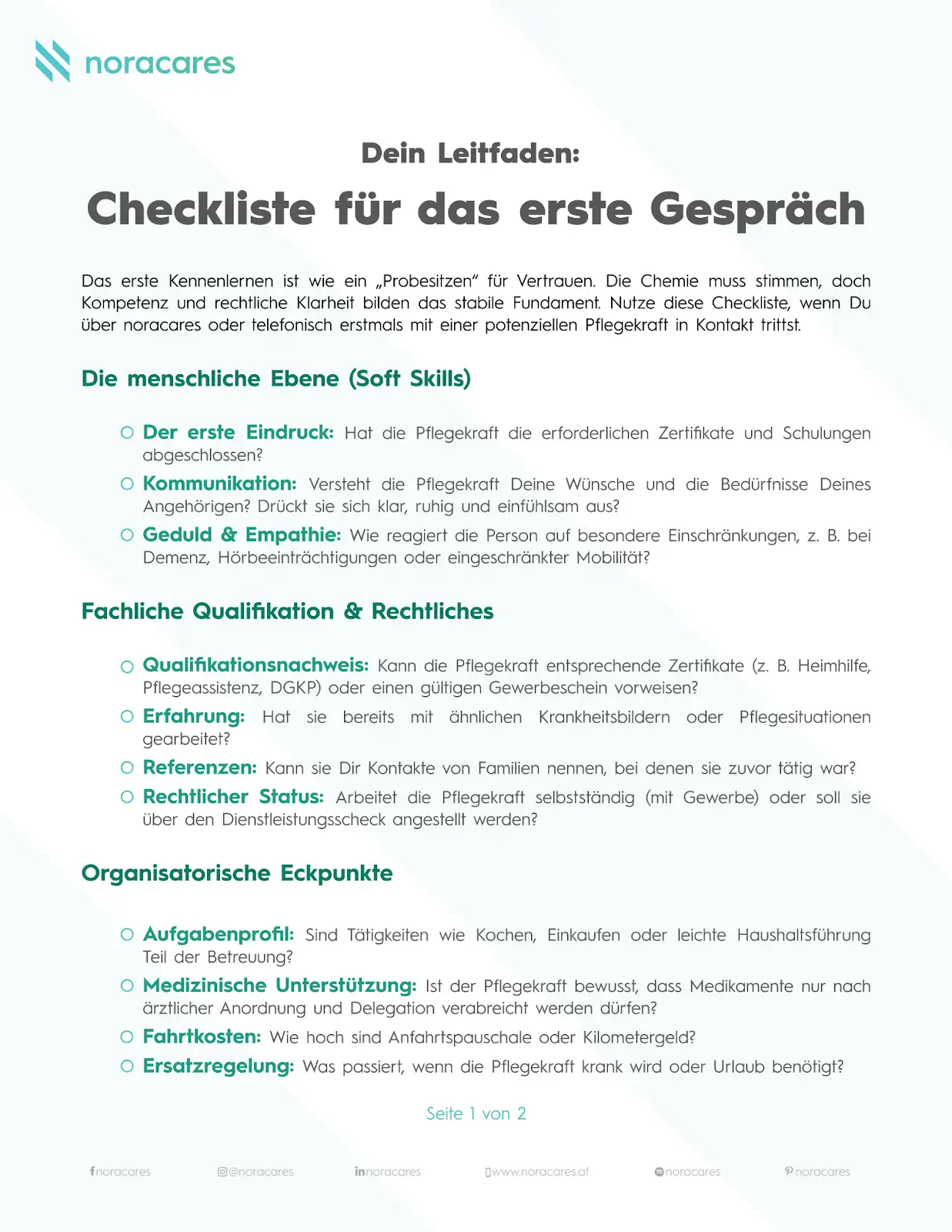
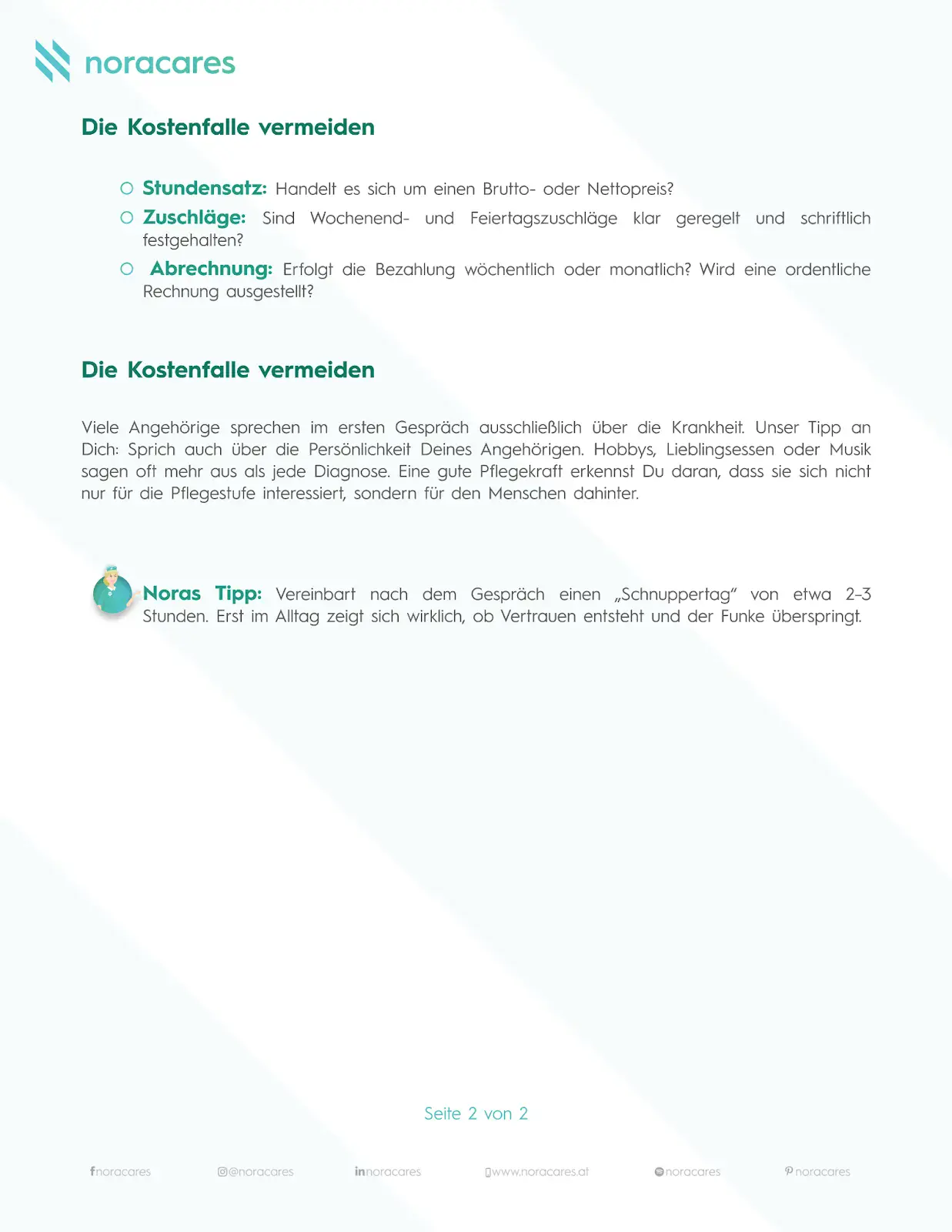
Here you can download your checklist for the first conversation.
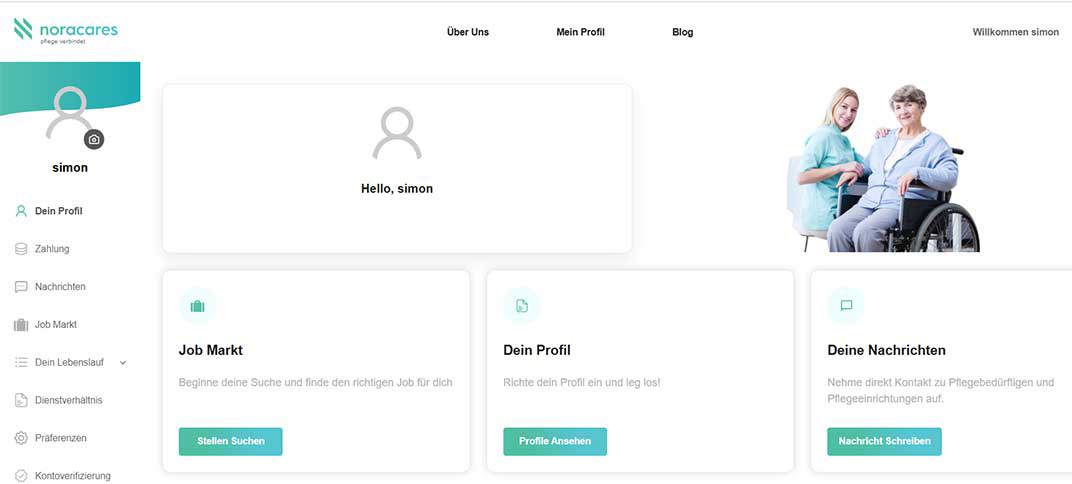
Searching for a caregiver often feels like an obstacle course under time pressure. You want to do everything right, but barely know where to start. Platforms like noracares are like a digital safe space in that moment: they take you by the hand and give you back control, without you having to carry the responsibility alone. Here you don’t just find “staff,” but the right support for your home.
noracares compared: Your advantage at a glance
To make your decision easier, we’ve summarized the key differences between searching on your own, a traditional agency, and noracares:
Verified profiles: Trust is good, knowledge is better
With an anonymous ad, you often end up with a queasy feeling in your stomach. With noracares, you can look behind the scenes even before you say “hello.” Every profile is like an open business card: qualifications, identity documents, and professional backgrounds are already on file. You don’t have to play detective yourself—you can rely on the basics being in place. That creates a calm you urgently need during this stressful time.
Direct contact: Because humanity shouldn’t be stuck on hold
When it comes to your parents’ wellbeing, you don’t want a call center—you want a real voice. The biggest advantage here is immediacy: you chat or talk on the phone directly with the people who will later make your everyday life easier. In those first moments, you can immediately feel whether the chemistry is right. That not only saves valuable time, it simply feels right—person to person.
Transparency & comparison: Your budget, your rules
Care costs are often a “black box”—you never really know what will end up on the bill. On noracares, the lights come on: at a glance, you can see who charges what hourly rate and exactly what you get for it. No hidden fees, no nasty surprises at the end of the month. You keep full control over your finances and find a solution that truly fits your life.
Maximum freedom: Help tailored to you, not to a contract
The biggest liberation is flexibility. While agencies often bundle rigid packages, noracares breaks those chains. You decide the scope:
- Hourly: Help only when you really need it (e.g., 2h in the morning).
- No commitment: No long-term restrictive contracts with agencies.
- Individual: Walks together or accompaniment to the doctor—exactly the way it fits your daily routine.
It’s care on equal footing—a modern solution that adapts to your pace, not the other way around.
The path to loving care doesn’t have to be complicated. With noracares, you turn uncertainty into a clear plan. In just four simple steps, you’ll find the support that fits your life and your family perfectly.

Your path to the right caregiver
- Step 1 – Register for free: Create your personal profile in just a few minutes. It’s the first step into a protected space full of possibilities—without any immediate obligations.
- Step 2 – Describe your needs: Whether it’s two hours on Tuesday afternoon or daily help getting up: briefly describe what tasks are needed, how many hours of support you’re looking for, and where you live. That way, exactly the right people will find you.
- Step 3 – Compare profiles & get in touch: Use our intelligent matching system. Take a look at verified profiles, read references, and get in touch directly. A short phone call or a video chat quickly shows you whether the chemistry is right.
- Step 4 – Start care – flexible & safe: Once you’ve found your preferred caregiver, you arrange the first assignment. Enjoy the good feeling that everything is legally sound and a good human fit.
Are you ready for more ease in everyday life?

You don’t have to make this decision alone! Finding a private caregiver by the hour is no small thing—especially when it’s about someone you care deeply about. Many relatives find themselves at exactly this point: they want to organize help without giving up control, without risking unnecessary costs, and without legal uncertainty.
The good news is: hourly private care at home can be exactly the solution you need right now—if you know what to look out for. What matters is not only the price or the number of hours, but also reliability, personal chemistry, and clear framework conditions.
If you’re wondering how best to proceed now, this structured approach will help you:
- Clarify your needs: First think about how many hours of support in everyday life are really necessary.
- Plan your budget: Get a realistic picture of the costs (use the examples for 2, 4, or 8 hours as a guide).
- Search the right way: Use transparent channels to find private caregivers in your region.
- Create security: Pay attention to clear agreements and legally sound contracts.
Many family members find it a huge relief to use platforms like noracares. Here you have an overview, can compare profiles, and rely on verified qualifications. This way, the decision remains entirely yours, while the search becomes easier and safer for you.
No matter which route you choose: you are acting responsibly. And you are allowed to get support – by the hour, at home, and exactly tailored to your situation.
Take the time you need, and take the next step with a good feeling.


- Personal care (trade): In Austria, a free trade. Most hourly caregivers work on this basis. They are self-employed, pay taxes and social insurance themselves, and conclude a contract for work and services with you.
- DGKP (Qualified health and nursing professional): The highest nursing qualification in Austria (in Germany: registered nurse). Only they are allowed to carry out complex medical activities independently.
- Home helper: A support worker who primarily helps around the household (cooking, cleaning, shopping) and assists with simple daily activities (e.g., getting dressed).
- Service voucher: A system in Austria for uncomplicated payment and insurance of household-related services (up to the marginal earnings threshold). Ideal for help that only comes a few hours per month.
- Treatment care: Medical measures prescribed by a doctor (e.g., giving injections, changing dressings). Private care workers may only take these on after official instruction (delegation).
- In-kind care benefit: In Germany, assistance paid directly by the long-term care insurance fund through a professional care service. With private, hourly care, the care allowance is usually used instead for financing.
- Home Care Act (HBeG): The Austrian law that regulates the framework conditions for the care of people in private households. It forms the legal basis for contracts for work and services in personal care.
- Marginal earnings threshold: An income limit (monthly) up to which employment can be treated in a simplified way for tax and social insurance purposes (important in the direct employment model).
- Activation: Measures to promote or maintain the mental and physical abilities of the person in need of care (e.g., memory training or doing exercises together).
- Travel allowance / mileage rate: Compensation for the caregiver’s travel to the location. In Austria, the official mileage rate is currently €0.42 per kilometer.

