Discrimination in Care: When age becomes a Barrier

A life full of care must not end in poverty. Discrimination in working life is not just a buzzword, but a reality that extends deep into retirement age. Women in care work in particular are still struggling in 2026 with the consequences of decades of disadvantage. We shed light on why the system is often broken and how we can restore dignity and fairness to caregivers, patients, and relatives.

“What I would sometimes give to be a man.” Johanna is 42, a single parent, and has worked wholeheartedly in care for two decades. But this thought is not a wish to change identity—it is a silent cry for justice. Johanna stands for millions of women who form the backbone of our healthcare system and yet still have less money in their accounts at the end of the month than their male colleagues in other sectors.
Although it is 2026, real equality is often still just a nice image in glossy brochures, while everyday life in hospitals or home care looks very different. Care workers achieve superhuman things day after day, yet the system in which they work applies double standards. Discrimination against women in care is no coincidence but deeply rooted in structures—it begins with unequal pay, continues through the lack of work-family balance, and ultimately ends in the hard impact of old-age poverty.
But discrimination has many faces: it affects the foreign skilled worker whose diploma is still not fully recognized despite years of experience. It affects the older patient whose wishes disappear behind efficiency tables. And it affects family caregivers who are worn down as a “self-evident resource” without real protection.
At noracares, we know: care is a matter of the heart, but it needs a fair foundation. We refuse to accept that caring is a poverty risk. For us, one thing is clear: quality in care can only arise where origin, gender, and age are not obstacles, but are valued as part of a precious diversity. In this master guide, we show you how these injustices arise, what rights you have in 2026, and how together we can build a future of care that leaves no one behind.
At its core, discrimination means devaluation instead of appreciation. In care, this happens when people are treated worse than others because of characteristics such as gender, origin, or age. In 2026, we see that rigid structures in institutions often prevent individual needs from being addressed—this is structural discrimination.
It affects the 24-hour caregiver from Eastern Europe who is treated condescendingly by the family, just as much as the 85-year-old nursing home resident who is denied active participation in decisions because of his age.

The different faces of disadvantage
Discrimination wears many masks. Professor Dr. Miriam Tariba Richter emphasizes that it is often the “small” things—overlooking an expert opinion or ignoring a patient’s wish—that cause the greatest harm.
1. Discrimination against care staff
Here, gender and origin are often the focus. Since the majority of care work is performed by women, the devaluation of “care work” is a massive problem.
- Sexism & the part-time trap: Women who work part-time because of raising children or caring for their own parents are often passed over for promotions. “Anyone who is not there 100% is not leadership material”—this way of thinking has long been outdated in 2026, but is still present in many minds.
- Racism in patient contact: Care workers with a migration background often experience rejection. A patient refuses personal care from a worker with an accent—here, institutions often find themselves in a dilemma between the patient’s wish and their duty to protect staff.
- Age discrimination (ageism): Experienced workers over 50 are often labeled as “less resilient.” They are denied modern digital training (e.g. for AI-supported care documentation) because they are not trusted with technology.
2. Discrimination against people in need of care
Recipients of care are also affected. This is often referred to as “disempowerment through care.”
- Infantilization: When seniors are spoken to in “baby talk,” that is a form of discrimination. It robs those affected of their dignity and identity as adult people with a lifetime of achievements.
- Social isolation: Patients without relatives or with low incomes often receive less attention than “self-payers” or people with a vocal lobby.
- LGBTQ+ in old age: Many seniors from the LGBTQ+ community hide their identity in nursing homes out of fear of rejection by staff or other residents.
In-depth overview: Forms of discrimination in everyday care
Why we must pay attention
Discrimination in care leads to a downward spiral:
- Care workers burn out or leave the profession, because they experience no appreciation.
- Patients withdraw, which worsens their physical and mental health (e.g. the progression of dementia).
- The system collapses because the quality of care declines.
This is where noracares steps in: We believe that fair placement and transparent communication are the first steps against discrimination. When caregivers are seen as equal partners and seniors as individuals with rights, everyone benefits.
Women make up around 80% to 85% of care staff in Austria and Germany. They are the backbone of our healthcare system, yet at the end of their careers they often face an alarming reality: despite decades of hard work, old-age poverty threatens them.
Real-life case example: Johanna
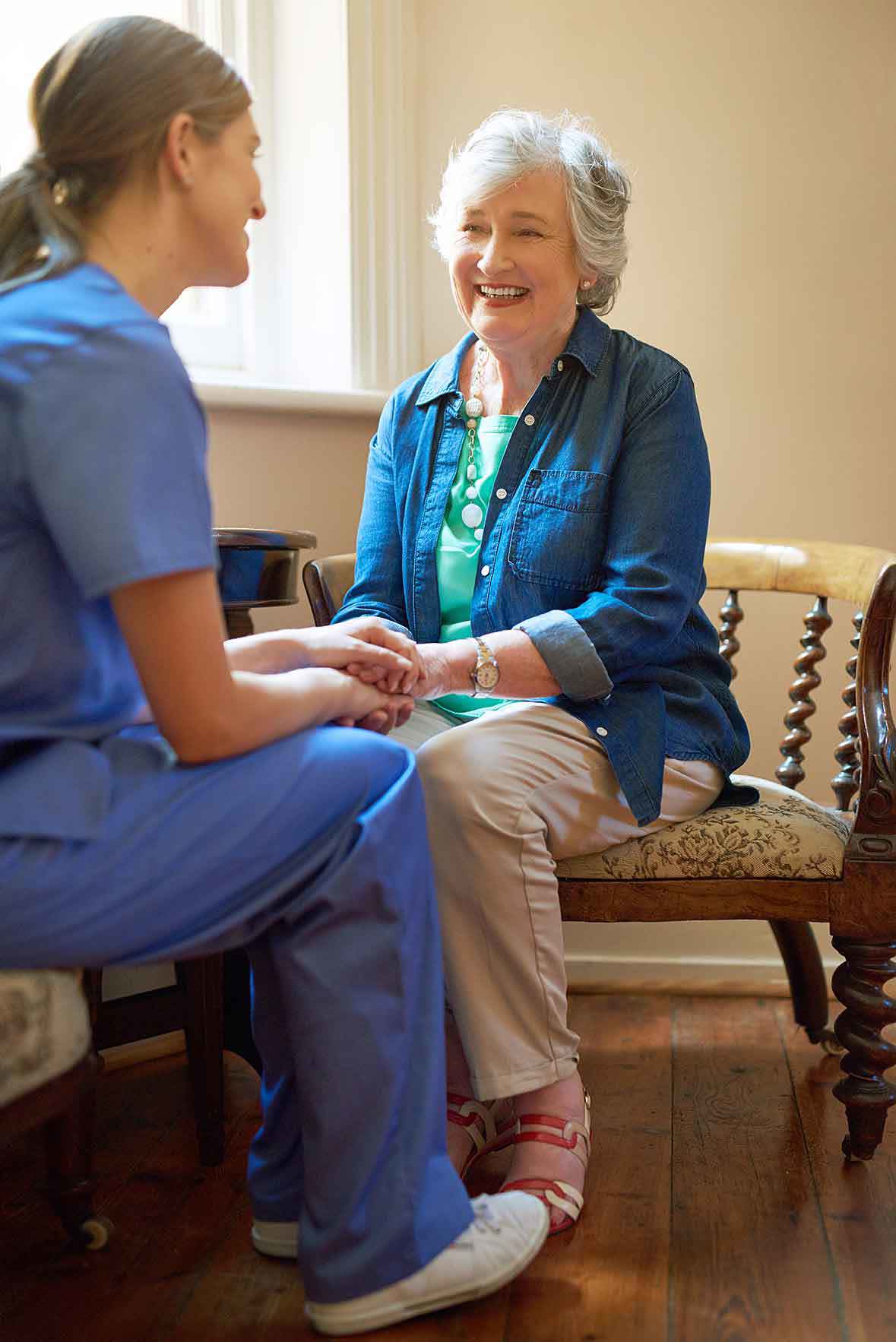
Johanna (42) is a single mother and works in inpatient care. Her career path is typical:
- Started full-time: Full commitment after completing her training.
- The part-time trap: Reduction of hours to raise her children. Today she works more again, but the missing years in pension insurance can hardly be made up for.
- Mental strain: Being asked to “fill in” is the order of the day. In 2026, the burden is higher than ever due to the shortage of skilled workers.
“Sometimes I call my daughter during my break to say good night to her. I would rather be with her, but I am needed more urgently at work.”
The financial reality in 2026
The gap between the genders remains huge. While pensions in Germany and Austria were adjusted in 2026 (in Germany, for example, by around 4.2% as of July 1, 2026), the structural gap remains.
Data based on Statistics Austria & Pension Insurance 2025/2026. Without widow’s pensions, the gap is often even over 40%. Forecast values based on data from the BMAS and the Federal Statistical Office 2026.
Why is that?
- Occupational segregation: Care work is often socially undervalued as a “female service to others” and paid less than technical “male professions.”
- Part-time rate: More than 50% of women in Austria work part-time (the highest rate in the EU), often because of a lack of childcare or caring for relatives.
- Gender care gap: Women spend an average of 1 hour and 16 minutes more per day on unpaid work than men.
A bright spot in 2026: The heavy-labor pension
In Austria, care work is officially considered heavy labor as of January 1, 2026. This makes earlier retirement possible (from age 60), but it does not automatically close the financial gap created by years of part-time work.
Checklist: 3 ways out of the old-age poverty trap in 2026
Anyone who works in care looks after others—often at the expense of their own security. So that you do not end up empty-handed at the end of your career, there are concrete levers in 2026:
- Pension splitting (Austria): If you reduced your working hours because of raising children, your partner can transfer up to 50% of their pension credits to your account. This directly offsets the “part-time gap” within the system.
- Voluntary supplementary insurance: In Germany and Austria, you can noticeably improve your future pension through small additional monthly contributions. Check with your pension insurance provider (DE) or the PVA (AT) whether making retroactive payments for school or training periods makes sense for you.
- Use occupational pension plans: Many care institutions offer attractive supplementary pensions in 2026. Actively ask whether your employer subsidizes your contributions. It is your money that gives you dignity in old age.
The path into the care profession is more demanding than ever in 2026. But for many, the disadvantage begins already in the lecture hall or during their first practical instruction.

Barriers for the next generation in care
Trainees and students with international backgrounds are a key pillar for the future of care in Europe. Nevertheless, they often experience microaggressions:
- Linguistic prejudice: When professional competence is wrongly measured by an accent. “Not fluent” German is often equated with a lack of medical understanding – a fallacy that discourages talented individuals.
- Cultural & religious symbols: Whether it is wearing a headscarf or taking prayer breaks – in the stressful day-to-day routine on the ward, there is often a lack of openness to religious diversity. Yet intercultural competence is a huge advantage precisely when caring for an aging, diverse society (e.g. the guest worker generation).
Discrimination in care affects not only those who wear the uniform. It often hits hardest those who are most vulnerable: people in need of care themselves.

The feeling of disempowerment
Many older people in Austria and Germany report a gradual “disempowerment.”
- Infantilization: When an 85-year-old academic is spoken to in “baby talk,” it violates her dignity.
- Decisions made over their head: Medical or care-related steps are often discussed with relatives while the person concerned sits beside them but is not included.
- Socioeconomic status: People with a low pension or without relatives (the “lobby” in the background) statistically often receive less time for social interaction because the system is geared toward efficiency.
In Europe, most care is provided at home. Family caregivers are the nation’s largest “nursing home,” but they often feel discriminated against because of:
- Lack of structural recognition: They are often viewed as a “free resource.” While professional care becomes more visible in 2026 through reforms (such as the care bonus or salary adjustments), relatives often struggle alone for aids or days off.
- Balancing work and care: Women in particular who care for relatives often experience career disadvantages at work – a form of indirect discrimination, because willingness to provide care is often interpreted as a lack of professional commitment.
In Europe, equal treatment is not a “bonus,” but a fundamental right. If you work in care or receive care, you are protected by a dense legal framework. Discrimination is a violation of applicable law.

1. The foundation: European Union (EU)
All laws in Austria and Germany are based on the EU equal treatment directives (e.g. Directive 2000/78/EC).
- The principle: No one may be disadvantaged because of religion, belief, disability, age, or sexual identity.
- Equal pay: The EU Pay Transparency Directive obliges employers from 2026 onward even more strongly to disclose and eliminate pay differences between men and women (gender pay gap).
2. Legal protection in Austria (AT): The Equal Treatment Act (GlBG)
In Austria, the Equal Treatment Act is your most important tool. It distinguishes between the world of work and access to goods and services (which also includes care counseling or nursing home contracts).
The law protects you from discrimination based on:
- Gender (including pregnancy and parenthood)
- Ethnic affiliation (origin)
- Religion or belief
- Age
- Sexual orientation
Special rules for care in AT:
- Care allowance discrimination: The Federal Care Allowance Act ensures that entitlement is assessed purely on medical and care-related grounds – origin or citizenship must not play any role as long as legal residence exists.
- Part-time protection: According to the Labour Constitution Act, part-time employees (often women) may not be treated worse than full-time employees unless there is an objective reason.
3. Legal protection in Germany (DE): The General Equal Treatment Act (AGG)
In Germany, the AGG (often also called the “Anti-Discrimination Act”) is the central pillar. It even obliges employers to take preventive action against discrimination.
Important areas of protection in everyday care work:
- Job advertisements & hiring: “Young, dynamic team” or “German as a native language” in job advertisements can already constitute inadmissible discrimination.
- Protection against harassment: The AGG also protects you against sexual harassment or bullying by patients. Your employer must intervene if you are harassed (§ 12 AGG).
- Right to complain: You have a legal right to complain to your employer without suffering disadvantages as a result (§ 13 AGG).

Whether in Vienna, Berlin, or Brussels – these practices are unlawful:
- Shift scheduling: It is illegal to systematically assign foreign professionals to unpopular shifts (only night shifts, only holidays) while permanent staff receive preferred shifts.
- Career & promotion: A rejection for a ward manager position with the justification “You have small children” or “At your age, leadership training is no longer worth it” is a clear violation of the law.
- Pay (equal pay): Women must receive the same pay as men for the same or equivalent work. Differences may only be justified by qualifications or professional experience, not by gender.
- Further training: Access to modern care technologies or further training must not be restricted because of age.
- Reversal of the burden of proof: This is your greatest advantage! Under discrimination law, you often only have to make the disadvantage credible. Then the employer must prove that they did not discriminate.
- Observe deadlines: In Germany, you often have only 2 months to assert claims under the AGG in writing. In Austria, for pay reviews it is often 3 years, but for other violations the deadlines are significantly shorter (6 months).
- Free advice: Use public authorities!
Discrimination thrives where people remain silent. Whether you are a caregiver, a relative, or a patient – silence often protects only the structures that burden us. Being heard is the first step toward change.

1. Immediate practical steps: From observation to action
When a situation “tips over,” quick but thoughtful action is required.
- Name the incident (the I-message): Discrimination is often not meant maliciously, but happens out of thoughtlessness. A factual one-on-one conversation can work wonders. Use sentences like: “I felt belittled in this situation because of my age/origin. Respectful interaction is important to me – could we please clarify this?” This way, you are not attacking anyone, but you are setting a clear boundary.
- Seek allies: You are not alone. In institutions, there are patient advocates, care ombuds offices, or the works council. During training, the youth and trainee representatives (JAV) are your first point of contact. Together, your voice carries more weight.
- Documentation (your proof anchor): Emotions fade, facts remain. Keep a brief record: What exactly was said? When? Who was there as a witness? This is the most important basis for legal steps under the AGG (DE) or GlBG (AT).
2. Nora's tips for respectful coexistence
Good care is not a one-way street. Respect is the currency that makes everyday life easier for everyone involved – no matter whether you come from Vienna, Berlin, or Madrid.
- Respect as an echo (give and take): Those who respect the values of others create the foundation on which they can demand respect for themselves. If you show that the life story of a senior or the professional expertise of a young colleague matters to you, you are signaling: “People meet here, not functions.”
- Faith & customs as an enrichment: In Europe, we live diversity. Whether it is the short prayer of a caregiver during a break or the religious dietary rules of a resident – acceptance creates peace. Ask: “How do you celebrate this holiday?” That breaks down walls.
- Use language as a bridge: Patience is the key. An accent says nothing about professional quality. A smile, an explanatory gesture, or using translation apps in 2026 often bridges language barriers better than repeating things loudly.
- Interest instead of prejudice: “Tell me about your homeland” or “What was your profession like back then?” opens hearts. Those who ask, learn – those who judge, stand still.
3. How we can make care fairer
It is up to institutions, families, and each and every one of us. A modern care system in 2026 must actively combat discrimination. Here is the direct comparison:
4. Take action: “civil courage” in care
We often do not experience discrimination ourselves, but observe it happening to others. This is where your role as an “ally” is crucial:
- Intervene: If a patient racially insults a colleague, you must not let it pass without comment. A calm “In this facility, we value polite interaction with all staff” provides enormous support to the affected person.
- Question it: If people are gossiping in the staff meeting about “the older colleagues” or “the part-time workers,” bring the discussion back to a factual level: “What concrete solution can we find for the duty roster that is fair for everyone?”
The ally quick guide: How to become a pillar of support in the team
Civil courage does not mean playing the hero, but saying the right thing at the right moment. Here is how you can support colleagues effectively:
- Listen & validate: When a colleague reports discrimination, listen without judging. A simple “I believe you, that was not okay” breaks the isolation of the affected person.
- Make it visible: Proactively address injustices (e.g. unfair duty rosters for part-time workers) in the team meeting. It is easier to stand up for others than for yourself.
- Offer to be a witness: Offer to be present as a neutral support person during a clarification meeting. Your mere presence changes the dynamics
noracares stands for care at eye level. We promote a climate in which every nationality, every age, and every way of life is respected. Because we know: only those who feel safe and valued can be fully there for others.

Discrimination in care – whether against women like Johanna, international professionals, or our seniors – is a hurdle that we can only tear down together in 2026. Justice begins where we stop looking away and start redefining the value of care. A life full of commitment to others must never end in poverty in old age.
At noracares, we stand for care at eye level. We promote a climate in which every nationality, every age, and every way of life is respected. Because we know: good care always begins with respect for the other person's personality. Be courageous, claim your rights, and model the respect that you yourself would like to experience. Together, we make the world of care a little fairer.
Would you like to become part of a fair care community? Register now with noracares and find care or jobs under conditions that are truly fair!


- AGG / GlBG: The legal “shields” against discrimination in Germany (General Equal Treatment Act) and Austria (Equal Treatment Act).
- Ally: A person who is not personally affected by a certain form of discrimination but actively stands up for the rights of those who are affected.
- Care work: Often unpaid work at home (raising children, caring for relatives), which statistically is mostly done by women.
- Gender pension gap: The percentage difference between the retirement incomes of men and women.
- Infantilization: The demeaning treatment of older people through “baby talk” or patronizing behavior.
- Nostrification: The formal recognition process for foreign professional qualifications in order to be allowed to work fully as a qualified professional in Austria or Germany.
- Pension splitting: The transfer of pension entitlements between partners in order to fairly balance childcare periods.

