Care allowance application Austria 2026: How to fill out the form correctly

You lovingly care for a relative, but the paperwork is holding you back? Don’t worry! With our guide, you can fill out the application form for care allowance in no time. We guide you step by step – so you receive the support you deserve.

If you have a loved one who depends on care, you want to make sure they receive the best possible support. Perhaps you provide the care yourself or organize everything behind the scenes to make everyday life as comfortable as possible. This also includes care allowance, which is intended to ease the financial burden. But the application form for care allowance can easily feel overwhelming:
- Which details are crucial?
- Which documents are required?
- Where do I submit the application?
- How long does processing take?
This guide is here to walk you through the process. Step by step, you will learn how to successfully submit the application in Austria and receive the financial support that you and your loved one deserve.
Before filling out the form, you need to know where to send it. In Austria, responsibility depends on which institution pays the pension or salary of the person in need of care:
Reused photo: Filling out the form: Important steps in the application process
In Austria, there is a nationwide care allowance that ensures financial support for people in need of care. It is an important benefit to help those affected and their families cope with the financial burden of care. However, to receive this money, you must first fill out a form in order to submit the application.
Step 1: Enter personal details

The first step may seem simple, but it lays the foundation for the entire application. Print out the form and grab a pen, or open the digital form and begin with the most important information: name, address, date of birth, and social insurance number. These basic details are what the responsible authorities need to correctly identify you and the person in need of care. Figuratively speaking: these details are like the key to a door. If even a small part is missing, the key won’t fit the lock and the door will remain closed. Therefore: carefully check that everything is complete and correct before moving on.
Make sure all data is correct and up to date. A transposed digit in the social insurance number or an outdated address could delay the entire process
Step 2: Provide information about the care situation

Here it becomes a bit more personal. You will now be asked what type of need for care exists. Does your relative require assistance due to illness or age-related limitations? Describe the care situation as precisely as possible. Imagine you are painting a picture – the clearer and more detailed you describe your relative’s condition, the better the reviewers will understand what the care looks like. If care services or care levels have already been approved, be sure to include this information.
Step 3: Describe the care effort in detail

This step requires a precise description of the daily or weekly care effort. How much time do you or the caregiver spend supporting your relative? Are there fixed times for tasks such as washing, dressing, or assistance with eating?
The magic threshold: 65 hours. Before you begin, keep one number in mind: more than 65 hours per month. This is the legal minimum requirement for level 1. If your documentation results in less than 65 hours in total, the application will be rejected. That’s why it is so important to also record seemingly small tasks.
“Real life” counts: In everyday life, we often underestimate how much we actually do because many tasks become routine.
An example from practice:
Maria fills out the application for her husband. At first she thinks: “He can still wash himself.” But then she pauses and remembers this morning: she stood next to him in the bathroom for 20 minutes to support him so he wouldn’t lose his balance, and had to repeatedly hand him the soap and towel.
These exact minutes are crucial! Is it not “assistance with washing” if you are only standing next to him? Yes, it is – because without your presence, personal hygiene would not be safely possible.
Think of this phase of the application like keeping a diary. You document in detail how much time and effort is invested. The clearer you present this “invisible” effort, the better the responsible authority can assess the actual need.
Are you unsure how to correctly calculate these hours in the care diary or what exactly counts as care time? Our noracares community shares valuable experiences on how to realistically document everyday care.
[Take a look at our blog article “Care documentation”].
Step 4: Review financial information

Now it becomes a bit more numbers-oriented: you must state whether the person in need of care receives additional benefits or has additional income. Benefits from the Pension Insurance Institution (PVA) or other institutions can influence the amount of care allowance. These details are like the final piece of the puzzle that completes the picture. If something is missing or entered incorrectly, the picture remains incomplete. Therefore, it is important to carefully check here as well that all relevant information is included.
Consider in advance whether it makes sense to apply for an increase in care allowance. Especially if the care situation has worsened or the care effort has increased significantly, an increase in care allowance may be justified.

Applying for care allowance is like carefully preparing for a long journey – the better prepared you are, the smoother the trip will be. Some things must not be missing under any circumstances, as they are like the passport that opens the door to the urgently needed funds. Here you will find the most important documents you need for the care allowance application:
Medical reports or certificates

The medical report is like a compass on this journey. It clearly shows which direction the path must take, as it confirms the need for care of your relative. Doctors document exactly to what extent assistance is required and which care level may apply. Without this “compass,” it will be difficult to receive the necessary support. Keep these documents safe – they are the heart of your application.
Care diary

The care diary is like a map that shows the path you or the caregiver take day after day while caring for your relative. It records how much time you or the caregiver invest in care, which tasks are carried out, and how often help is needed. These records help the reviewers better understand the situation and assess the actual level of care required. The more precise the entries, the clearer the picture of the care situation becomes. This map leads you directly to a fair classification of the need for care.
Identification documents

Without an ID card or social security number, you won’t get far on your journey – they are like the passport that proves you are entitled to apply for care allowance. These documents verify your identity and show that you or your relative are eligible in Austria. Make sure everything is up to date and double-check that all documents are fully attached. If one of these important papers is missing, your application may not be processed or could be significantly delayed.
Additional certificates

Perhaps your relative is already receiving other care benefits – these are like additional building blocks that complete the overall concept of care support. If other financial assistance or care services are already being received, attach these certificates to the application. This additional information helps the authorities gain a complete picture and process the application correctly.
All these documents are your tools on the path to financial support. The more thoroughly you prepare them, the easier and faster your application will be processed. Remember: Every journey begins with the right preparation – and with these documents, you are well equipped.
To prevent your application from being unnecessarily delayed or rejected, pay special attention to these "no-gos":
- Wrong account: The care allowance must be paid into an account that the person in need of care (or their legal representative) is authorized to access. A random relative’s account often leads to problems.
- Missing signature: The most common reason for returns! For paper forms, the original signature is mandatory. If you apply online, you must digitally sign the application via ID Austria.
- Outdated reports: Diagnoses from 10 years ago are not helpful. The assessors need current reports (ideally no older than 1–2 years) that confirm the current care needs.

Filling out the care allowance application is like building a house – every detail must be correct so that everything stands firm and stable in the end. A small mistake can cause the foundation to wobble and lead to rejection or delays. To ensure your application stands on solid ground, we have a few more tips for you.
Check all information carefully before submitting the form

We have already mentioned it, but because it is so important, we want to emphasize it again: Be sure to carefully check all information once more before submitting the application! Imagine you are an architect inspecting the house one last time before handing it over. Every window, every door, every detail must be correct so that everything functions smoothly. You should review your application in the same way: Every number, every box, every signature should be checked. A small mistake, such as an incorrectly stated social security number, can bring the entire application to a halt. So take your time for one final, thorough review.
Fill out the form calmly to avoid mistakes

Have you ever tried to do something important in a hurry and later realized you overlooked small but crucial details? The care allowance application is not a quick test – it is more like a puzzle in which every piece must fit. Sit down calmly, take enough time, and go through the form step by step. Have you filled out all fields correctly? Is a signature missing? Stress and haste are the biggest enemies of accuracy.
If you are unsure, ask the PVA directly or seek help from an advisory center

Sometimes a form can feel like a maze – confusing, with many turns where you do not know which way is right. If you are unsure about a question or detail, do not hesitate to contact the Pension Insurance Institution (PVA) directly. They are like signposts in this maze and can guide you safely through the process. Alternatively, you can seek support from an advisory center – they are like an experienced tour guide who helps you find the right direction.
Avoid incomplete information
Think again of the house you are building. If you leave out an important beam, the roof cannot be securely supported, and the entire construction project will be delayed. It is the same with the care allowance application: If important information is missing or incorrect, the entire process can be significantly prolonged or the application may be rejected altogether. So be thorough and make sure you have provided everything necessary.
The care allowance application is your path to support, but it requires care and patience. With a calm mind and the right preparation, you create a solid foundation that safely brings your application to its goal.

The moment you submit your care allowance application is like the final step of a long journey – but this step also needs to be well prepared so that you reach your destination safely. Here are the stages you should keep in mind:
1. Complete the form in full
When preparing the form, it is like writing an important letter that tells your whole story. Every word and every detail must be correct so that the recipients understand your message. If you follow the steps we have outlined in our guide, you should not encounter any problems.
2. Attach documents

Now comes the moment when you gather your “evidence.” These documents are like an ID that proves your story is genuine. Without medical certificates, a care diary, and identification documents, your application remains incomplete. Make sure all necessary proof is neatly organized and attached to the application. It is like collecting the final puzzle pieces – only when all pieces are in place does a complete picture emerge.
3. Submit the application
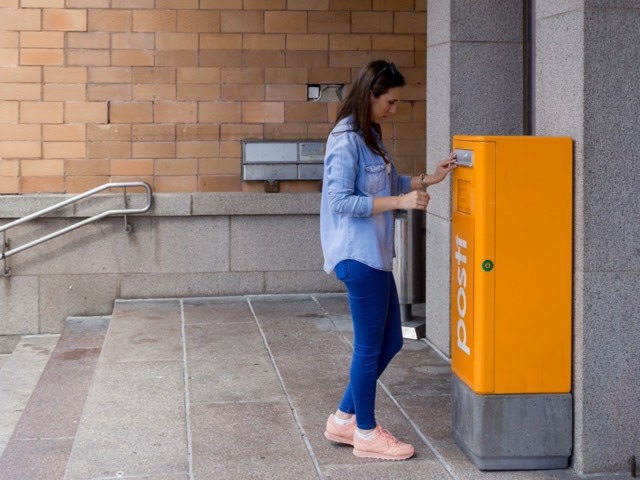
Now it is time: Your application is complete, and all documents are ready. It is time to send it on its journey. Whether by post, email, fax, or in person – this step is like sending an important package. You are submitting something that is of great importance to you and your relative. Make sure it goes to the correct address so that it arrives safely.
Whitepaper checklist: To help you keep track of all steps, we have prepared a checklist for you. You can download it here.
Many applicants ask themselves: “I have sent the letter – what happens behind the scenes now?” In Austria, the process generally follows this timeline:
1. The medical assessment (The home visit)
After your application has been received, the insurance provider (PVA, SVS or BVAEB) will contact you to arrange an assessment appointment.
- What happens there? A doctor or a qualified nurse comes to your relative’s home.
- Your goal: During this conversation, the actual care needs are determined. The care diary is your most important support in presenting everyday life truthfully.
2. Processing time
Unfortunately, patience is required here. On average, in Austria it takes around two to three months for a decision letter to arrive in your mailbox.
3. Payment
As soon as the positive decision (approval) arrives, payment is made monthly in arrears (usually on the first banking day of the following month). The money is transferred directly to the account of the person in need of care.

Filling out and submitting the care allowance application may seem like a big and sometimes overwhelming task – but it is in your hands. With every step you take, you bring yourself and your relative closer to the support that can make everyday life easier. The process may seem long and sometimes rocky, but at the end there is assistance that allows you to focus on what truly matters – providing care and spending time together with your loved ones.
Do not let small obstacles discourage you. Mistakes can be corrected, and there is an answer to every question. It is not a sprint but a marathon, yet at the end of this journey comes the certainty that you have done the best for yourself and your loved ones. You are not alone on this path – there is help and support to accompany you. Stay calm, be thorough, and trust that every step brings you closer to your goal.
If you are ready to take the next step in caring for your relative, register today on noracares. There you will find valuable resources, support, and a community that can help you master the challenges of caregiving. Take the first step and sign up today – for a better future and greater security in care!


- BVAEB: Insurance Institution for Public Employees, Railways and Mining. Responsible for civil servants and employees in the public sector.
- ID Austria: The official digital identity verification in Austria. From 2026, it is required to sign care allowance applications online in a legally secure and paperless manner.
- Informal care: Care provided by relatives or friends (non-commercial). The care allowance is granted as a lump-sum compensation for this.
- Minimum classification: Certain diagnoses (e.g., blindness or wheelchair use) automatically result in a defined care level, regardless of the exact hourly calculation.
- PVA: Pension Insurance Institution. The largest insurance provider in Austria, responsible for most employees and workers.
- Retroactive payment: Care allowance is paid from the first day of the month in which the application was submitted – even if processing takes several months.
- Suspension of care allowance: If a patient is hospitalized or in rehabilitation for more than one day (at the expense of social insurance), payment is temporarily paused.
- Expert assessment report: The result of the home visit. A doctor or nursing professional assesses on site how many hours of assistance per month are actually required.
- SVS: Social Insurance for the Self-Employed. Responsible for entrepreneurs, freelancers, and farmers.
- Right of disposal: Only the person in need of care or a legally authorized representative (adult representative) may decide which account the care allowance is paid into.

