Finding reputable 24-hour care: What you should look out for

When a loved one suddenly needs help around the clock, many relatives begin a search that is not only emotionally stressful but also confusing: How do I find care I can truly trust? How much does reputable 24-hour care cost? And how can I tell whether a provider operates legally and fairly?

The term “24-hour care” often sounds simpler than it is. Between promotional offers, complicated contract clauses and legal gray areas, it is not easy to recognize a reputable care agency. That is exactly where this article comes in.
In this comprehensive guide, we show you:
- How to distinguish reputable from unreliable providers
- Which documents & contracts you should definitely review
- What costs are realistic – and which subsidies you can claim
- Which warning signs you should never ignore
- Through case studies, what your path to the right 24-hour caregiver can look like
You will receive practical tips, legal information, examples and a checklist – so you can make the right decision with peace of mind.
Because: Good care begins with trust.
So-called 24-hour care does not mean that a caregiver works 24 hours a day, but rather that they live in the household of the person in need of care and provide support during the day and, if necessary, at night. It is an intensive, personal form of care – but legally and organizationally complex.
Identifying reputable 24-hour care services
The first step toward suitable 24-hour care is identifying a reputable provider. This choice significantly affects the well-being and safety of your loved ones. To make this important decision easier, you can rely on certain criteria and characteristics that indicate the reliability and quality of a care service. These primarily include the following:
Qualifications and certificates

To ensure that your loved ones receive high-quality care, it is important to pay attention to the qualifications and certificates of the care service. Quality seals and certificates are usually an indicator of reputable providers. They confirm that the care provider meets certain standards in support and care.
But you can also use the caregivers’ own qualifications, such as state-recognized training and regular further training, as a criterion. They are indicators of trustworthy care.
Transparent communication
A reputable provider communicates openly and clearly. This means: transparent contracts without fine print, a clear cost structure without hidden fees, and a written service description in which all tasks and responsibilities are precisely defined. The contract should also include fair termination terms, emergency management, and the option to adjust care services at short notice.
Personal contacts and availability
You should always have a personal contact person who is available for questions or problems – by phone, email, or on-site. An on-site consultation before care begins is another sign of customer orientation and transparency.
Right to participate in staff selection
An important quality feature is the opportunity to participate in selecting the caregiver. Reputable agencies consider your wishes and requirements and allow you to decide who will care for your loved ones.
Recommendations and reviews
A good way to find a reputable care service is through recommendations and reviews. Talk to friends, family, or acquaintances who have already had experience with 24-hour care services. Personal recommendations are often very valuable because they are based on direct experience.
You can also use online reviews and testimonials to get an impression of the provider. Websites such as Google, care portals, or social networks often offer comprehensive reviews. Pay attention to recurring themes in the reviews, both positive and negative, to gain a well-rounded impression. A care service with predominantly positive feedback and satisfied customers is often a good choice.
Additional relevant criteria
In addition to the points already mentioned, further criteria can help assess the quality of a care service. These include the provider’s availability, the possibility of contact in emergencies, and flexibility in adapting care plans to the individual needs of patients. Contract design, such as termination conditions and options for short-term adjustments to care services, also plays an important role. A good care service not only offers high-quality care but also excellent customer service characterized by accessibility and flexibility.
In addition to the desired characteristics, you should also pay attention to possible warning signs and “red flags” to ensure the quality of care. Here are some key signs that could indicate problems:
Insufficient information
about the qualifications of caregivers and the services offered. Reputable providers should provide clear details about the training and qualifications of their staff and present transparent service descriptions. If such information is missing or unclear, it may indicate a lack of professionalism, especially if the origin or qualifications of the caregiver are not documented.
Lack of transparency regarding costs

Another warning sign is unclear or hidden costs. Reputable care services should offer a transparent cost structure and clearly communicate all possible fees in advance.
Make sure the provider supplies detailed and clear information about all potential costs. Be cautious with flat-rate prices without a detailed breakdown of services or if the contract lists different working hours than advertised – for example, if “24-hour care” is mentioned, but only eight hours of work per day are contractually specified (note from the Consumer Advice Center Germany).
Poor quality of care
The quality of care itself is a decisive indicator of a provider’s reliability. Signs of poor care may include frequent staff changes, inadequate support, or negative testimonials. Constant turnover or repeated complaints often point to internal problems and poor care quality.
No say in staff selection
An important criterion when choosing a care service is also having a say in the selection of care staff. A reputable provider should be willing to respond to your needs and wishes and give you the opportunity to influence the selection of care staff.
If the provider is not willing to consider individual preferences or special requirements, this indicates a lack of flexibility or little interest in the satisfaction of family members. Good cooperation and adaptability are crucial for the quality of care and the well-being of those affected.
Missing written agreements

Verbal promises are unreliable. Reputable providers record all agreements in writing – from the service description and costs to termination periods and emergency arrangements. If there is no clear contract, this is a clear warning sign.
No proof of an A1 certificate
If a caregiver is posted from an EU/EEA country, the A1 certificate is mandatory. If this proof is missing, it may lead to legal and financial risks.
Availability for questions

The availability of the care service is also an important aspect. A reputable provider should always be reachable and respond promptly to questions or concerns. If you have difficulty reaching the provider or do not receive satisfactory answers to your questions, this is usually not a good sign. Accessibility and a willingness to listen to concerns and questions are essential for a trusting collaboration and high-quality care.
Comparison: Reputable vs. unreliable care agencies
The following overview provides you with a quick and clear comparison of the key features that help you distinguish reputable care agencies from unreliable providers. At a glance, you can see what really matters and which warning signs should make you cautious.
The monthly costs for 24-hour care in your own home range between 1,800 and 2,500 euros, depending on qualifications, scope of tasks, and care model. In cases of particularly high care needs or required specialized knowledge, the price may also be higher.
Additional placement or service fees, travel costs, as well as substitute coverage by a second caregiver may also apply. If you use an agency, you should carefully review the cost structure to avoid surprises. Privately organized caregivers without agency placement are generally less expensive
Subsidies and financial support
In Austria, there are various subsidies that can significantly reduce the financial burden. These include:
Additional relief measures
- Tax benefits: Care costs can be deducted as extraordinary expenses
- Subsidies for care aids: e.g. care bed, wheelchair or emergency call system
- Regional allowances: Support from municipalities or care funds
With these subsidies and forms of support, 24-hour home care can be financially manageable.
Anyone organizing 24-hour care is often faced with the question: Which employment model is best suited? Each model has its own strengths – but also pitfalls you should be aware of.
With the posting model from EU countries you benefit from a legal, cost-effective solution with clearly regulated procedures. At the same time, language barriers or bureaucratic hurdles can make communication more difficult.
A self-employed caregiver offers maximum flexibility and direct coordination. However, you should be aware of the risk of bogus self-employment and review the legal framework.
The classic employer model gives you full control and legal certainty. However, it is often more complex and associated with higher costs.
The following table provides a compact overview so that you can quickly see which model best fits your situation:
Tips for checking reliability
Last but not least, you should review your initial impressions. We have compiled some helpful tips to check the provider’s trustworthiness:
On-site visit and discussions

A personal visit to the care facility or the service provider’s office, as well as discussions with the care management and caregivers, can be a valuable tool to assess trustworthiness. It gives you the opportunity to gain a direct impression of the environment and the way the care service operates. Pay attention to how clean and well-maintained the facility is and how the staff behave. Conversations with the care management should provide clarity about the services offered, the qualifications of the caregivers, and the provider’s care philosophy. A transparent and open dialogue can help you assess the provider’s commitment and professionalism, as well as their empathy.
Background check
Use public registers and databases to review the legal and professional background of the care service. In many countries, there are official registers where you can access information about licensing and any legal disputes involving care providers. These checks can provide insight into the provider’s credibility and reveal potential warning signs such as insufficient approvals or legal issues. Reviews and experiences from former or current clients can also offer valuable information.
Contracts and agreements

Make sure that all important points are clearly and thoroughly documented in the contracts and agreements. A reputable care service should offer you a written contract covering all essential aspects of care, costs, and conditions. These include:
- Description of services: Detailed list of the care services offered.
- Cost breakdown: Clear information on costs, fees, and payment terms.
- Contract term and termination conditions: Information about the duration of the contract and the conditions for early termination.
- Emergency procedures: Information about measures in emergencies and how they are communicated.
Make sure you read the contract carefully and understand all clauses before signing it. If you are unsure or have questions, you should seek legal advice to ensure that your rights and those of your relatives are protected.
By following these tips, you can thoroughly assess the reliability of a care service and make the best possible decision for the care of your loved ones.
To help you better understand the importance of each point, we have compiled some case studies for you. These examples illustrate typical situations and how different approaches to selecting and reviewing a care service can lead to different outcomes.

Case study 1: The challenge of having a say
The Lang family wanted to define specific requirements for their mother’s care, including a particular caregiver with experience in dementia care. A care service they considered was not willing to accommodate individual preferences and only offered generic caregivers. After several discussions in which their wishes were not taken into account, they continued their search. They decided to take the search into their own hands. After all the setbacks and disappointments, they did not want to leave their grandmother’s care to chance. They created a profile on noracares and soon found a caregiver who was properly trained to meet their specific needs and who impressed them with her empathy and competence during a personal video call.
Case study 2: The lack of transparency in costs
The Schmidt family chose a care service that initially offered a low price. However, during contract signing, it became apparent that there were several additional costs that had not been clearly communicated, such as extra fees for emergency services or certain care services. These hidden costs led to significant financial burdens that the Schmidt family had not planned for. Through this experience, the family learned that a detailed and transparent cost breakdown in advance is absolutely essential.
Case study 3: The importance of background checks
The Fischer family wanted to ensure that the care service they were considering had no legal or financial issues. Although the reviews on the provider’s website were consistently positive, the Fischers researched public registers and sought personal experiences in forums. It turned out that the provider had repeatedly been in the news in the past due to poor quality of care and financial irregularities. Thanks to this information and the negative experiences of others, the family was able to avoid falling for the provider’s deception. The Fischers took the search for a caregiver into their own hands and found a caregiver through noracares who matched the family’s needs and works reliably.
These case studies show how important it is to proceed carefully when selecting a 24-hour care service. They highlight the importance of questioning information in order to make a satisfactory care decision.
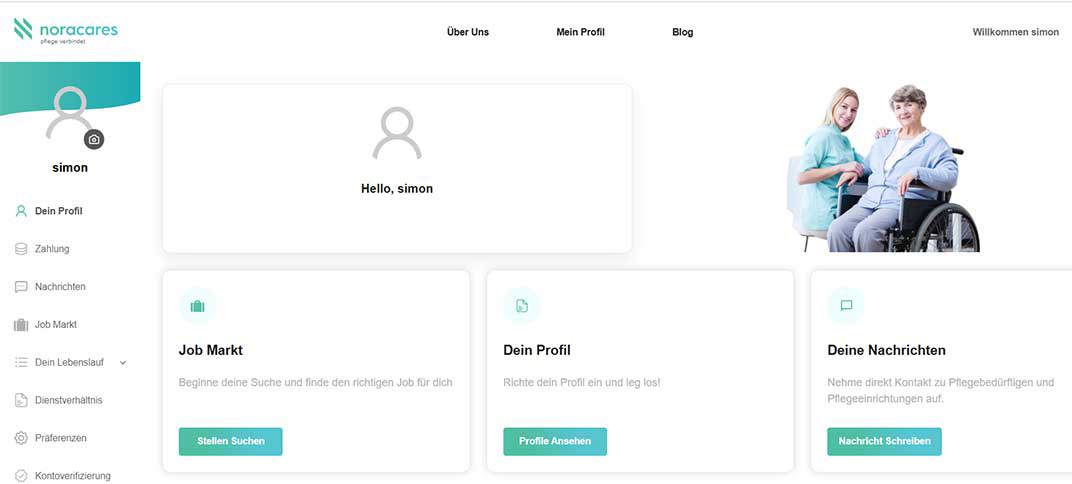
At noracares you will find a reliable and trustworthy partner when it comes to care. The platform stands out through clear and transparent communication as well as highly motivated caregivers. Your needs and wishes are our top priority, which is why you have the sole decision-making authority over which caregiver is right for you. You have the opportunity to get to know the staff in advance, communicate with them via video or in person, and address specific requirements. We also offer a transparent cost structure in which all fees are clearly communicated in advance, without hidden costs or unpleasant surprises. Because you decide who you work with, using the noracares care platform is also very affordable.
In addition, you can rely on the availability of our staff: If you have questions or concerns, we are happy to assist you and provide fast and effective support. Positive feedback from previous clients and the company’s successful history in the care sector confirm noracares as a trustworthy partner that combines quality, transparency, and individualized care.
noracares: Your partner for fair 24-hour care
At noracares, you have full control over who cares for your loved ones. We offer complete transparency, fair and understandable prices, and the opportunity to personally choose from carefully selected caregivers.
It’s that easy:
- Register – Create a profile for free and describe the care situation and individual needs.
- Personalized suggestions – Based on your information, noracares suggests suitable caregivers – exactly according to your criteria.
- Get to know each other – Communicate directly with caregivers via chat or video call to check if the personal connection is right.
- Start of care – Once all details are clarified, care begins on time and smoothly.
Thanks to noracares, you will not only find a caregiver, but a person who truly cares, listens, shows compassion, and brings life back into everyday routines – almost like a new family member.

Finding the right 24-hour care is more than comparing prices – it’s about trust, safety, and humanity.
When you take this path, you carry great responsibility for someone you love. That deserves not only respect – but also reliable information, clear contracts, and a good feeling about your decision.
Use our checklist, request offers, and ask all the questions that are on your mind. Good providers will be happy to answer them. Because: Good care begins with an honest conversation.
Register now with noracares and find the right caregiver for your loved ones.

PDF for download: Checklist reputable vs. non-reputable agencies

- A1 certificate: Proof confirming that a caregiver posted from an EU/EEA country is covered by social insurance in their home country. It is essential for legal employment and protects you and the caregiver from legal risks.
- Posting model: An employment model in which a caregiver is employed by a foreign company that posts them to Austria or Germany to care for your loved ones.
- Staff turnover: The frequency with which staff change within a care service or agency. High turnover can be a warning sign of poor quality and bad working conditions.
- Care allowance: A monthly state financial benefit granted to partially cover the costs of home care and make caregiving easier.
- Quality assurance: A process that ensures care services consistently remain at a high level through regular reviews, training, and fixed standards.
- Bogus self-employment: A legal situation in which a person formally works as self-employed but is actually treated like an employee. This can have legal consequences when employing caregivers.
- Consumer protection agency: An independent organization that advises consumers on legal and financial matters. In the context of care, it also warns against non-reputable providers.

