Nursing jobs in Germany: Your opportunities in all 16 federal states

Are you looking for a job as a registered nurse? Then you are exactly right here. Registered nurses like you are more in demand than ever – and that means for you: many opportunities, exciting workplaces, and real security for your future.
At the same time, we know that working in care is often challenging: shift work, high pressure, and little time for yourself. That is exactly why we not only show you current job offers here, but also everything you need to know: salary comparisons, requirements, further training opportunities, and tips on how to apply successfully.
Our goal: to give you a clear overview so that you can find the job that truly suits you – with fair pay, development opportunities, and a better work-life balance.
Every day is different, every situation unique. Registered nurses are right in the middle of it: they hold hands, offer comfort, and make decisions that change lives. They are the bridge between medical care and human closeness.
Definition & Role Profile
A registered nurse is much more than just an assistant at the bedside. They are true all-rounders in the healthcare system. With professional expertise, empathy, and organizational talent, they ensure that patients are not only medically cared for but also supported on a human level. Their role is diverse: they measure vital signs, administer medication, document treatment processes, assist with mobilization and patient care, and are often the first point of contact for worries, fears, or questions.
Typical Workplaces
Registered nurses are needed wherever people require medical or nursing support. These include:
- Hospitals: Here they support patients through surgeries, therapies, and daily ward care.
- Nursing homes: They care for older people, support them in everyday life, and ensure a safe, caring environment.
- Outpatient care: In the home environment, they help patients remain independent for as long as possible – from administering medication to wound care.
- Day care facilities: During the day, they provide care, activities, and medical support for people living at home.
- Office jobs in health insurance companies or institutions: Registered nurses are also in demand here, for example in counseling, organization, or quality management.
Everyday Work & Challenges
The everyday work of a registered nurse is as varied as it is demanding. Shift work, weekend and holiday duties are just as much a part of it as the responsibility for the well-being of others. Psychological stress is common, whether due to severe illness trajectories, emotional crises of patients, or the challenge of ensuring the best possible care under time pressure.
At the same time, direct contact with people, their gratitude, and the small moments of success in everyday life provide a deep sense of meaning and make this profession one of the most valuable of all, despite all the challenges.
Being a registered nurse means taking responsibility and supporting people through special moments. To succeed on this path, both formal qualifications and personal qualities are needed to master everyday work.

Training & Legal Foundations
Imagine stepping into a care room: theory and practice go hand in hand here like two dance partners. That is also how the training to become a registered nurse works in Germany. Since January 1, 2020, there has been a generalist nursing education program that combines three former paths (elderly care, general nursing, and pediatric nursing) into a strong, versatile profession. This three-year training prepares you to care for people of all ages in all types of care settings – from infant care to acute hospital treatment and outpatient care at home (BMG).
The new training program is anchored in the Nursing Professions Act (PflBG) – it is state-recognized, automatically recognized throughout the EU, and makes you flexible for jobs in many European countries.
To get started, you need certain requirements:
- School qualification: usually an intermediate school-leaving certificate (e.g., Realschule); possible with a lower secondary school certificate if you already have vocational training or experience in the care sector.
- Interest in people: enjoyment in supporting and accompanying others.
- Professional basics: Basic knowledge of German, mathematics, and natural sciences makes it easier to get started.
- Health suitability: Physical and mental resilience for everyday nursing work.
- Motivation and commitment: Willingness to take responsibility and work in different settings.
Soft Skills & Personal Qualities
The profession of a registered nurse is not just a job. It is a combination of heart, mind, and attitude. Imagine being like a rock in the surf: calm, reliable, with clear priorities – because in everyday nursing work, more than just professional knowledge is required.
Important soft skills & personal qualities of a registered nurse:
- Empathy: sput myself in others’ shoes and show compassion
- Resilience: stay calm and capable of acting even in stressful situations
- Teamwork: find efficient solutions together with colleagues
- Patience: take time for patients and remain calm
- Good communication: reassure relatives, encourage patients, clear agreements within the team
- Sense of responsibility: safe medication administration, careful documentation, respectful actions
- Organization & prioritization: complete tasks efficiently and in a structured way
These qualities accompany you every day and turn professional competence into genuine care quality – for the patients and for the entire team.
Career change & retraining
Care is also an open path for people who want to make a fresh start: a career change into care is possible, even without traditional care training. Many start, for example, as a nursing aide or nursing assistant – often after shorter training courses to gain initial practical experience and get a feel for everyday care work.
Anyone who ultimately wants to work toward the qualification as a nursing professional can enter the three-year generalist training program via retraining or further training. Depending on prior education, the training period can be shortened, and part-time models make it possible to build professional experience and qualifications at the same time.
This turns your passion – for helping, understanding, and supporting – into a qualified professional qualification with prospects. And who knows? Maybe you’ll soon contribute to a care routine that is the sunshine in the day for many people.
Every figure on the pay slip reflects several points: your experience, the place of work, your commitment, your responsibility.

Starting salary vs. professional experience
A nursing professional’s earnings grow over time – almost like a tree that takes deep root and, over the years, reaches more strongly toward the sky. Experience, additional qualifications, and position in the profession have a major influence on salary.
Source: jobvector.de
According to gehalt.de, the average salary for nursing professionals in Germany is 4,223 euros per month – a solid foundation that continues to grow with experience, responsibility, and further training.
Differences in salary and demand by federal state:
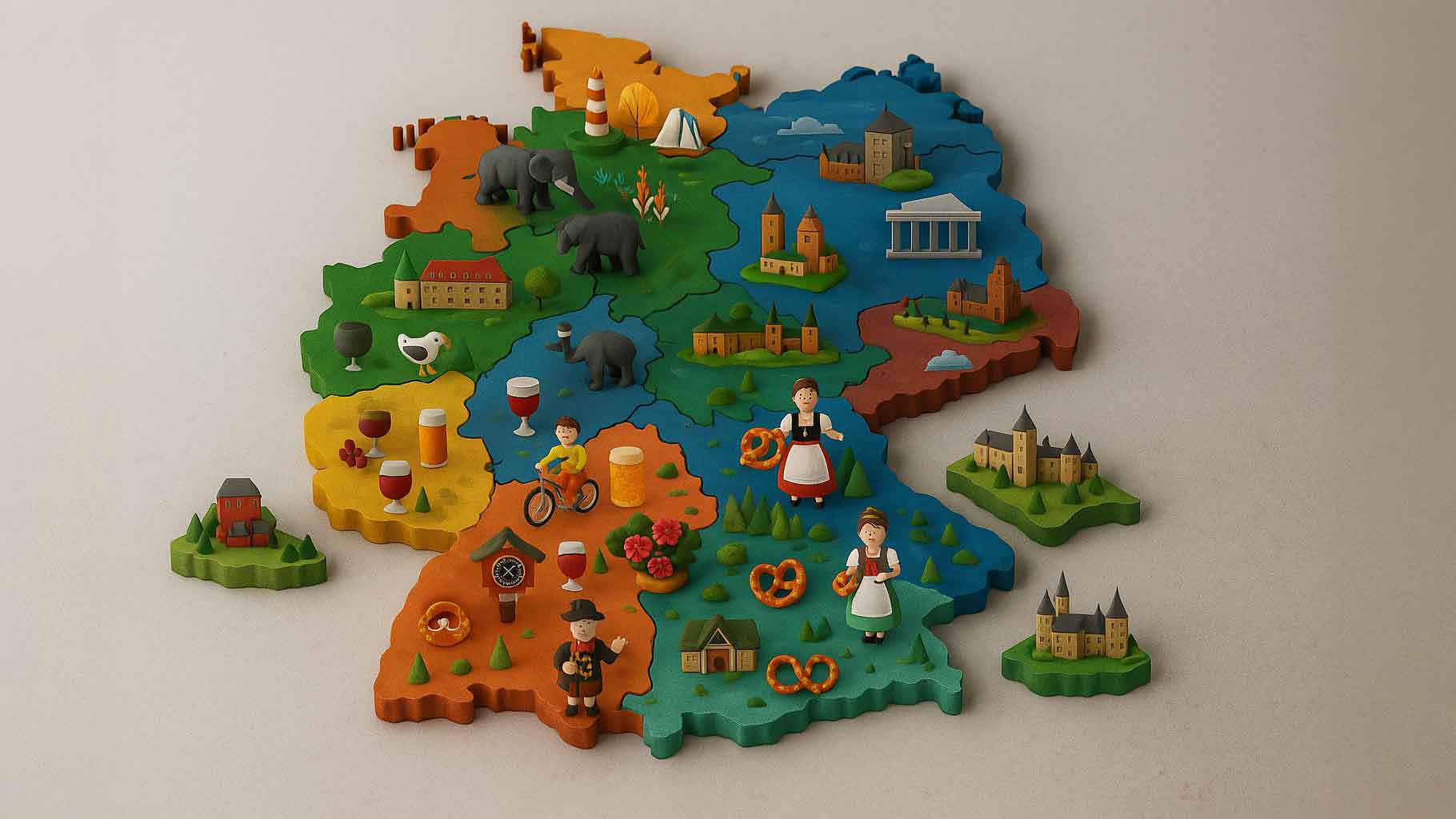
Salary and demand for nursing professionals vary across Germany as much as the landscapes themselves – from lively metropolises to quiet rural states. While pay is high in some federal states, demand relative to the population shows where nursing staff are especially needed.
The following table provides an overview: it not only shows the average gross salary, but also classifies demand relative to the number of inhabitants. This makes it clear at a glance where nursing professionals are particularly sought after and which regions offer comparatively more job opportunities.
Source: gehalt.de
Find care jobs near you now at noracares!
Additional benefits & perks
Salary isn’t just the base pay – it’s also the extras that brighten up the workday:
Important benefits for nursing professionals:
- Allowances for night, weekend, and public-holiday shifts often add an extra 25 to 100 percent.
- Annual special payments such as Christmas or vacation pay (common with collective agreements).
- Vacation days: usually 5–6 weeks of paid vacation per year.
- Training & career: subsidies or paid time off for continuing education, specializations, and professional development.
- Work-life balance: Regular working hours (around 38–40 hrs/week), flexible part-time models, family time arrangements.
- Social benefits: Health insurance, pension, and accident insurance are standard in EU healthcare systems.
Imagine the German nursing labor market like a pulsating, strong heart that keeps the healthcare sector alive – but at the same time pumps harder as our society gets older.
Nursing professionals are in demand like never before: their work is not only irreplaceable on a human level, but also a decisive future factor for our social cohesion. And yet, a closer look at the numbers shows how big the challenge really is.

Current figures & skilled labor shortage
The nursing labor market in Germany is enormous and at the same time strained:
- Around 1.7 million people currently work in nursing professions in jobs subject to social insurance contributions, a significant increase compared to previous years (Statistics of the Federal Employment Agency).
- Despite this growth, demand for qualified nursing professionals remains very high: for every 100 reported vacancies for registered nursing professionals, there are only about 44 job seekers, which signals a noticeable skilled labor shortage (Federal Employment Agency).
- Especially in regions like Saxony, there are far more open positions in nursing than there are unemployed nursing professionals – a clear sign of bottlenecks in the labor market (Federal Employment Agency).
These figures make one thing clear: nursing is a stable employment engine and a growth sector at the same time, but there is a lack of enough qualified staff to meet the rising demands.
Forecasts 2025 – 2030 (demographic change)
Our society is getting older and that directly affects the nursing labor market like an ever-stronger wind that moves the tree of our healthcare system:
- Forecasts show that the demand for caregivers will continue to rise significantly in the coming years, while the number of potential workers declines (prognos.com)
- The number of people in need of care in Germany is continuously increasing and is expected to keep growing, which increases the pressure on the labor market (forum-verlag.com)
- Model calculations suggest that the need for nursing staff cannot be met in the mid-2020s unless more skilled workers are trained or further qualified (Statista).
In short: 2025 to 2030 are not the distant future, but a period in which it will be decided how well care and support for our older people can be organized.
Imagine your nursing profession like a wide horizon: you start with solid training and the further you go, the more paths open up before you. Whether you deepen your expertise in a specialized niche, take on leadership responsibility, or even work academically – nursing is not a one-way street, but a network of opportunities and development possibilities.

Specializations
After the three-year training program, you can deepen your career specifically through professional specializations. Almost as if you were discovering new landscapes on your professional map. Specialized advanced training courses give you in-depth expert knowledge and open doors to special fields of work, such as:
- Intensive care and anesthesia nursing: Here you become an expert in caring for critically ill people, monitor vital functions, and work with devices that keep lives stable – your eye for detail is especially important here (Pflegestudium).
- Palliative care: In this field, you work supporting people at the end of life – with high emotional intelligence and respect for dignity and closeness.
- Pediatric and neonatal care: Nursing professionals specializing in infants, children, and adolescents understand the particularities of development, communication, and family dynamics.
Depending on the field, such training often lasts 12–24 months or longer and combines practice, theory, and exams. After that, you are not only experienced, but also officially qualified for your specialty discipline.
Career advancement opportunities
When you shift your gaze from direct patient care to the bigger picture, career paths open up in leadership and organization. With experience and additional qualifications, you can take responsibility for teams, processes, and quality of care:
- Ward management: You coordinate the processes on a ward, plan shifts, and ensure sufficient staffing.
- Director of nursing (PDL): In this role, you are at the top of the nursing department (in outpatient services or larger facilities) and are responsible for personnel planning, quality assurance, and strategic development.
- Department leadership & management: In larger hospitals or corporations, you can take on areas such as quality or patient management and thus rethink nursing practice.
These roles often mean that you work less in shift work, but instead have more organizational responsibility, strategic involvement, and influence on working conditions – a real leap in development (Medi-Karriere).
Degree programs & academic continuing education
If you want to take your career further upward, a degree program can be the next step that opens up completely new perspectives for you:
- Nursing management & health management: Here you learn to manage nursing processes, teams, and resources efficiently and humanely – ideal if you want to work in management.
- Nursing education: You become an educator and support new generations of nurses – a path that combines knowledge and empathy.
- Nursing science: In research and teaching, you help shape the future of nursing, further develop methods, and contribute empirically to better care (Pflegestudium).
A degree opens new doors – into leadership roles, politics, health authorities, research, and education. Many programs take 3–4 years for a bachelor’s degree, with additional master’s options, and enable you to build a career that goes beyond direct nursing care.
Searching for your dream job in nursing can sometimes feel like an adventure through a dense forest. But with the right preparation, the path becomes clear and manageable. To make sure you’re well equipped, it’s worth tackling the most important steps systematically:

Step-by-step tips for your application

Every application is more than a document. It is the first moment when someone senses who you are.
Even before a word is spoken, an impression is formed: between lines, wards, and experiences. Especially in nursing, it’s not only about what you have learned, but how you work, how you think – and how you treat others.
This application guide helps you make your strengths visible. Clear, honest, and without disguise. So that your CV doesn’t just list qualifications, but builds trust – and your interview doesn’t feel like an interrogation, but like a conversation on equal footing.
How to convince with your CV & in the interview
A good application is like a calm, confident handshake: clear, honest, and trustworthy. It shows not only what you can do, but who you are. Especially in nursing, personality and attitude count just as much as qualifications.
The CV: clear, well-structured, human
Your CV doesn’t have to be a novel. It should feel like a well-organized toolbox: everything important within reach, nothing unnecessary.
What you should pay attention to:
- Clear structure: Personal details, education, professional experience, further training
- Set a nursing focus: e.g., wards, care areas, special tasks (wound management, dementia, palliative care)
- Make soft skills visible: Teamwork, resilience, empathy – ideally with short examples
- Up-to-dateness: Be sure to add continuing education, certificates, and additional qualifications
Typical interview questions – and how to answer confidently
In an interview, it’s rarely about perfect answers. It’s about how you think, feel, and act. These questions come up especially often:
1. “Why did you choose the nursing profession?”
Sample answer: “I wanted a job where my work has meaning. For me, nursing means giving people security in difficult moments – professionally and humanly.”
2. “How do you handle stress and time pressure?”
Sample answer: “I set clear priorities, stay calm, and communicate openly within the team. Especially in stressful situations, structure helps me – and focusing on what matters most: the patients.”
3. “How do you respond to difficult or emotional situations?”
Sample answer: “I take time to listen and remain respectful. Not every situation can be solved, but often just being present and showing genuine care helps.”
4. “What do you expect from your future workplace?”
Sample answer: “Reliable processes, appreciation within the team, and working hours that remain healthy in the long term. I want to be able to provide good care – without losing myself.”
Resilience check: how to recognize a healthy team
(Before you sign your employment contract)
A high salary is of little use if you are burned out after three months. During the interview or a trial shift, look out for these five warning signs or positive indicators for your mental health:
- Active absence management: Ask directly: "What happens if two people call in sick tomorrow?" Is there a float pool or a system that prevents you from constantly having to fill in during your free time?
- A lived culture of supervision: Are there regular team meetings or external supervision to work through stressful cases or stress together?
- Transparent duty rosters: Are duty rosters created in good time (at least 2–4 weeks in advance)? Is there a "guaranteed time off" arrangement?
- A culture of learning from mistakes instead of blame: Ask how the team deals with mistakes. A healthy team uses mistakes to learn, not to punish.
- Onboarding concept: Is there a dedicated mentor for the first weeks? Anyone who is thrown straight in at the deep end without real onboarding faces a high risk of frustration.
noracares makes job hunting for care professionals as easy as a walk along a clear path: direct, transparent, and without detours. On the platform, you can create your profile, showcase your qualifications, and get in touch with families directly. No agencies, no fees – you stay in control of your professional future.
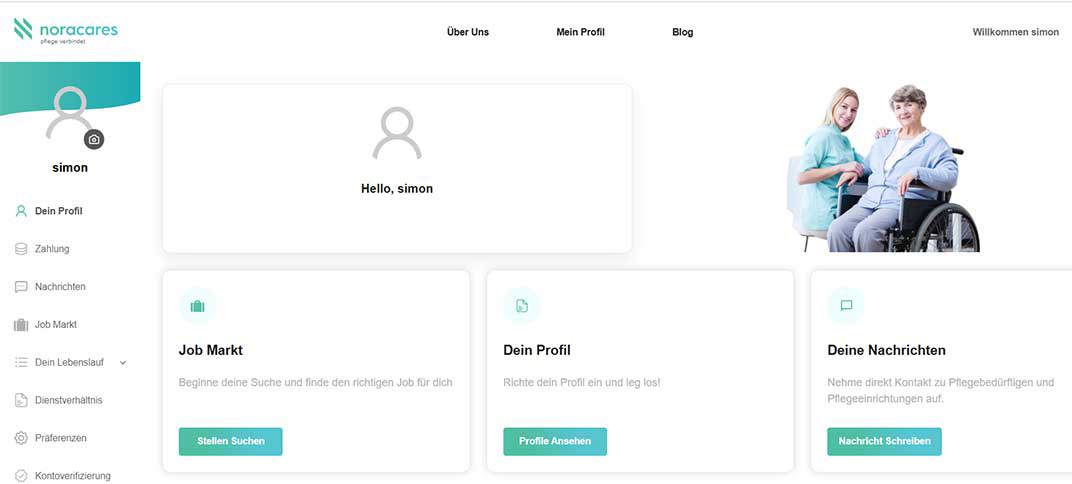
Advantages of noracares at a glance:
- Direct contact with families: No intermediaries – you decide who you work with.
- Transparency: All inquiries, visibility, and conditions are clearly traceable.
- Free of charge: No hidden fees or commissions.
- Flexibility: You decide when and how much you want to work.
- Make your profile visible: Your qualifications, experience, and specializations are immediately visible to interested families.
- Easy management: Inquiries, appointments, and arrangements are handled directly through the platform – everything in one place.
Find your dream job in just a few steps
With noracares, you can find your dream job in just a few steps:
- Create a profile: Enter your training, work experience, additional qualifications, and preferred working hours.
- Increase visibility: Upload certificates and references to build trust.
- Review inquiries: See directly which families are looking for support.
- Get in touch: Introduce yourself, clarify details, and arrange appointments.
- Work flexibly: You decide on locations, working hours, and scope.

Imagine you love your job as a qualified nurse with all your heart – but you realize the system is slowly burning you out. That’s exactly what happened to Sophie from NRW.
In the clinic, her daily routine was an endless race against the clock. Too many rooms, too few hands, and a duty roster that left hardly any room for a smile. Sophie felt that in the end she was only caring for checklists, not people. This not only made her tired but also left her feeling empty inside. She didn’t want less responsibility – she wanted more meaning.
The moment of decision
Sophie looked for a way back to what nursing is really about: time for genuine encounters. She wanted to truly arrive again – with one person, in a real home. She longed for moments when she could listen, explain, and simply be there.
Arriving at noracares
Through noracares, Sophie pressed her personal “reset button.” Today she works in hourly private care and has taken back control:
- Freedom: She decides herself when and how much she works.
- Focus: She supports elderly people in their daily lives and gives them the security they need.
- Appreciation: Instead of shift chaos and ward stress, she now experiences genuine reliability and gratitude.
For Sophie, this step was not an exit from her profession. On the contrary: it was her way back to real nursing care.

One thing is clear: As a qualified nurse, you have better opportunities today than ever before. Whether in a hospital, in outpatient care, or in a nursing home – you are needed everywhere. It’s not just about a secure job, but also about your personal fulfillment: helping people, taking responsibility, and at the same time advancing your own career.
We know that working in nursing is not always easy. Shift work, physical strain, and sometimes little recognition are part of everyday life. That’s exactly why it’s important to find an employer that suits you – with fair pay, good working conditions, and genuine appreciation.
Use the information and tips from this article to take the next step: compare salaries, review further training opportunities, and discover the many job offers waiting for you. Your dream job in nursing is just a few clicks away.
Start your search now and find the job that truly suits you – because nursing needs you!

- Generalist nursing training: The training program valid in Germany since 2020 that combines the previously separate professions of elderly care, general nursing, and pediatric nursing into one unified professional profile (qualified nurse).
- Nursing Professions Act (PflBG): The legal basis for nursing training in Germany. It regulates standards and state recognition of the profession, which is also valid throughout the EU.
- Career change: Switching to the nursing sector from another professional field, often starting as a nursing assistant after shorter qualification measures.
- Outpatient care: Nursing and medical care provided to patients in their own homes to maintain independence in everyday life for as long as possible.
- Day care: A semi-residential facility where people in need of care are looked after during the day while spending nights and weekends at home.
- Inpatient care: Care provided in facilities such as hospitals or nursing homes where patients are accommodated permanently or for the duration of treatment.
- Specialist further training: Additional qualifications after training (usually lasting 12–24 months) to become an expert in niches such as intensive care, anesthesia or palliative care (end-of-life care).
- Head of nursing services (PDL): A leadership position responsible for the overall organization of the nursing department, staff planning, and quality assurance within a facility.
- Nursing management / nursing education: Academic paths (degree programs) to either manage facilities economically and in terms of personnel or to teach future nurses at schools.
- Quality assurance: Measures and processes to ensure that nursing services meet high medical and ethical standards.
- Gross salary: Pay before deductions for taxes and social security contributions. For qualified nurses, the national average in 2026 is around €4,223.
- Bonuses: Additional tax-free or tax-advantaged payments for shifts at special times, such as night work (25–100%), Sundays, or public holidays.
- Skilled labor shortage: A labor market situation in which demand for staff significantly exceeds the number of available qualified professionals (in nursing, often only 44 applicants for 100 vacancies).
- Demographic change: The change in population structure (an increasing number of older people) leading to a continuously rising demand for care services.
- Empathy: The ability to put yourself in patients’ feelings and situations in order to build a trusting relationship.
- Vital signs: Essential body functions (e.g., pulse, blood pressure, temperature) whose measurement and monitoring are part of daily tasks.
- Work-life balance: The desired balance between professional life and personal time, which in nursing is often improved through flexible models or administrative jobs.

