Nursing Professions in Austria 2026: PA, PFA & DGKP – tasks, differences & career

If you are searching for nursing professions in Austria, you probably want one thing above all: clarity. What professions are there at all? What is the difference between nursing assistance, nursing specialist assistance and diploma-level health and nursing care? And which career path suits you?

Especially in the care sector, many terms come up – and it is not always immediately clear who takes on which tasks and how the areas of responsibility are regulated. In Austria, nursing professions are clearly structured and legally regulated. That provides security – but can seem confusing at first glance.
Here you will get a clear, easy-to-understand guide to the most important nursing professions in Austria: which professional groups there are, how they differ from one another, where nursing staff work – and which development opportunities are open to you.
Nursing professions include all legally regulated activities in which people receive medical and nursing care – in hospitals, nursing homes or in the home environment. These include tasks such as personal care, support with mobility, monitoring health status and – depending on qualifications – independent care planning and the implementation of medical measures.
What sets nursing professions apart from many other professional fields: they are not just a job, but a social responsibility. Nursing staff accompany people in the most vulnerable moments of their lives – after operations, with chronic illnesses, in old age or at the end of life. This closeness requires not only expertise, but also empathy, resilience and a high degree of professionalism.
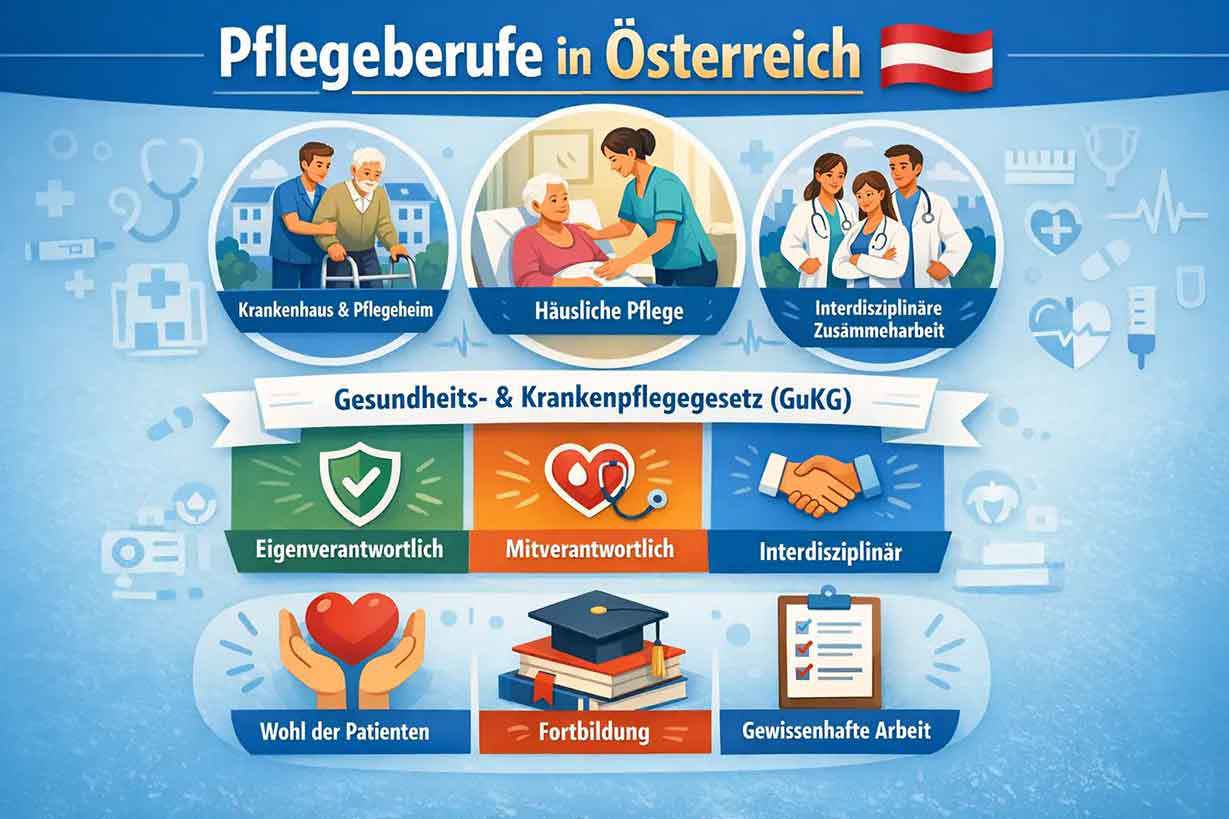
The legal basis: The GuKG
In Austria, nursing professions are regulated by the Health and Nursing Care Act (GuKG) – one of the central laws in the Austrian healthcare system.
“Health and nursing care is regulated in the Health and Nursing Care Act (GuKG) and includes independent, shared-responsibility and interdisciplinary activities." — Health and Nursing Care Act (GuKG), Austria
The GuKG specifically stipulates:
- Nursing staff must practice their profession conscientiously and without distinction between persons
- The well-being and health of people in need of care always come first
- Nursing staff are required to continue their education continuously – because nursing is constantly developing
- In the event of threatened injury or health damage, expert help may not be refused
Why this legal regulation is important
The clear legal anchoring of nursing professions has one decisive advantage in Austria: it protects both people in need of care and the nursing staff themselves. Every professional group – from nursing assistance to diploma-level health and nursing care – has clearly defined tasks, rights and limits.
What this means for you as a nursing professional: you know exactly what you may do, what lies within your responsibility – and where you must involve support from a more highly qualified specialist. This clarity is not a restriction, but a protection – for you and for the people you care for.
Nursing as part of the healthcare system
Nursing professions are the backbone of the Austrian healthcare system. Without qualified nursing staff, high-quality medical care would simply not be possible – from acute care in hospitals to the compassionate support of older people at home.
You can find current information on the role of nursing professions in the Austrian healthcare system at gesundheit.gv.at and sozialministerium.at.
The Austrian care system is based on three clearly defined professional groups that together form a three-level system:
- Nursing assistance (PA) – Basic care under supervision
- Nursing specialist assistance (PFA) – Expanded nursing tasks with more independence
- Diploma-level health and nursing care (DGKP) – Highest qualification level with full personal responsibility
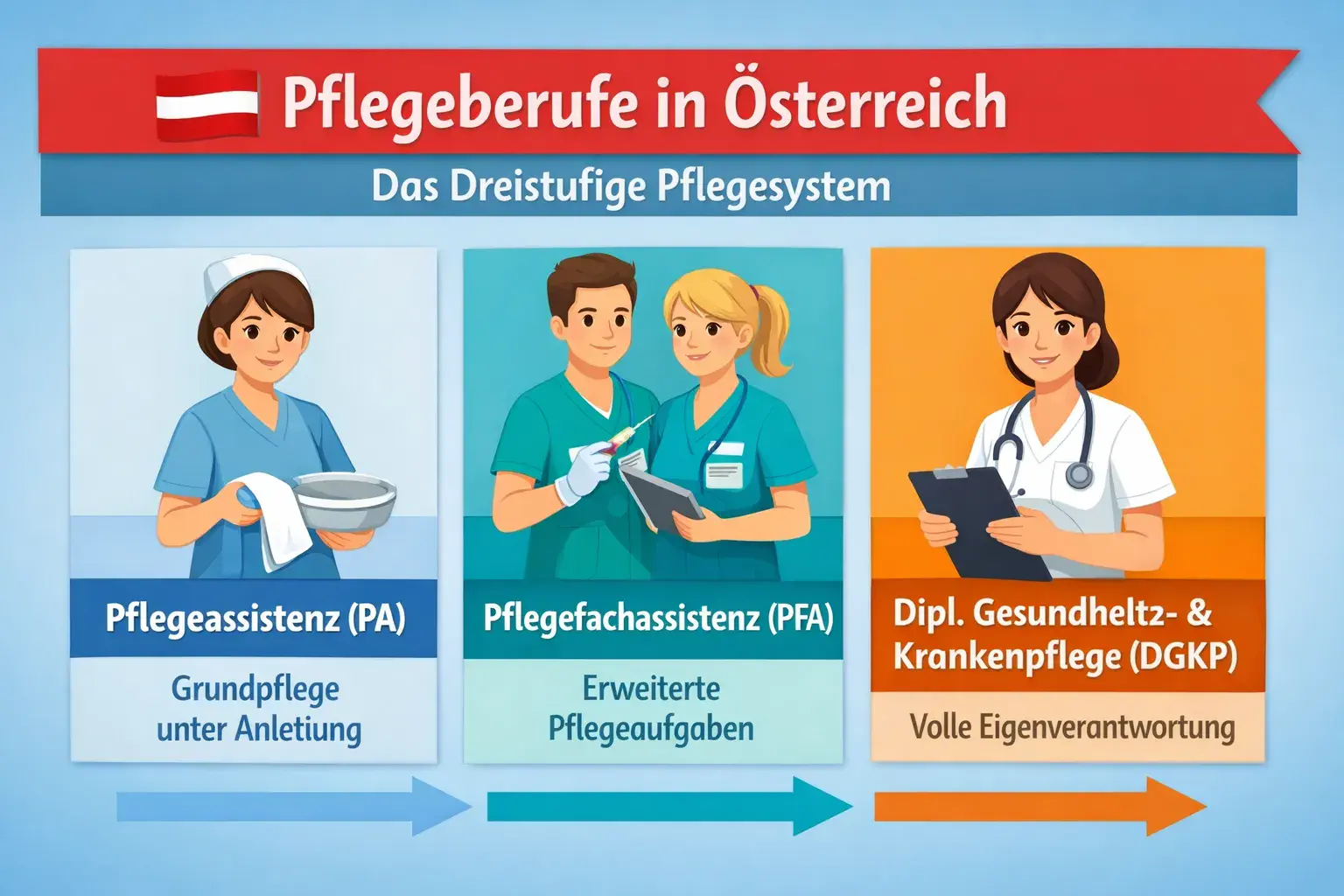
The higher the qualification, the greater the independently responsible decision-making scope in nursing.
What makes this system so special: the three professional groups are not separate from one another, but work closely together every day. The PA supports the PFA, the PFA works under the professional guidance of the DGKP – and together they ensure seamless, high-quality care for the people who need care.
Supplementary professions in the care sector
In addition to the three core professions, there are also other professional groups in Austria that work in the care and support sector – regulated by the Social Care Act:
- Home help – Support with everyday tasks at home, without medical nursing tasks
- Diploma social care – More comprehensive support with a social-educational focus, for example in disability work or elderly care
These professions meaningfully complement the care system – especially in mobile and home care, where support and assistance in everyday life are just as important as medical nursing care.
The Austrian care system is clearly structured – and that is exactly what makes it so reliable. Three professional groups with different qualifications and areas of responsibility work hand in hand every day to ensure seamless care.
Overview of nursing professions in Austria
(Source: GuKG; Ministry of Social Affairs )
The three professional groups are not independent of one another – they form a coordinated system in which each level supports and complements the others. The PA relieves the PFA of basic tasks, the PFA supports the DGKP with expanded measures – and the DGKP bears the overall professional responsibility for the care process.
Differences in the area of competence
(Source: GuKG; Ministry of Social Affairs )
Nursing assistance (PA) – The entry into nursing
Nursing assistance forms the entry level in the Austrian care system. Nursing assistants are close to people – they support basic nursing and caregiving measures and ensure that people in need of care feel safe and well looked after. Their work is always carried out under the guidance of a PFA or DGKP.
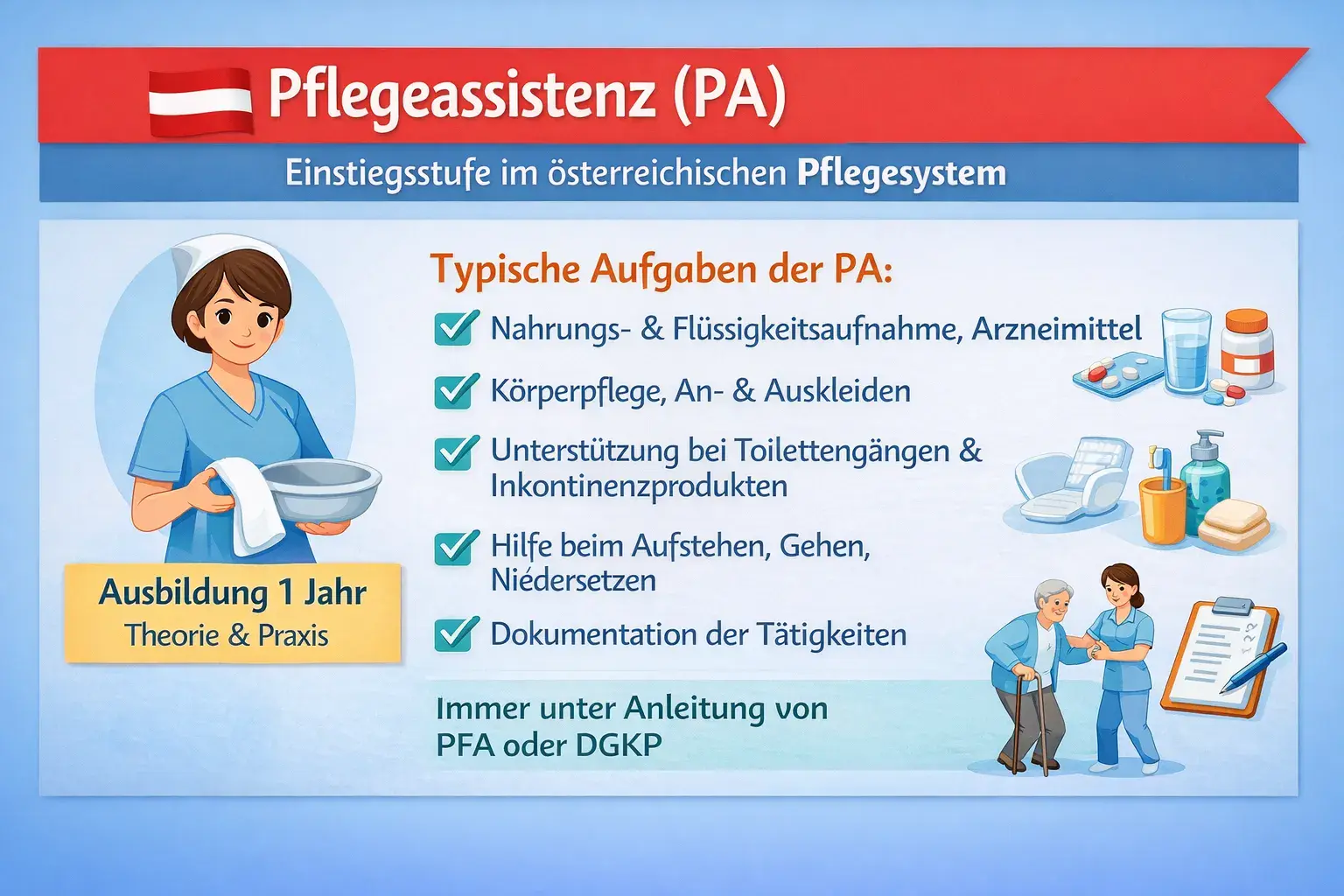
Typical tasks of PA:
- Support with oral food and fluid intake as well as medication intake
- Help with personal hygiene and dressing and undressing
- Support with using toilets and changing incontinence products
- Help with getting up, lying down, sitting down, and walking
- Documentation of all activities carried out and informing supervising nursing staff
Training: Training to become a PA lasts one year and includes both theoretical lessons and practical placements in various care settings – including hospitals, nursing homes, and mobile care. The qualification authorizes professional practice throughout Austria.
Nursing Specialist Assistant (PFA) – Expanded competencies, more responsibility
Nursing specialist assistance is the intermediate qualification level and was introduced as an independent profession with the reform of the GuKG. PFA staff have significantly expanded competencies compared to PA – they may independently carry out certain medical measures and also bear the corresponding responsibility.
In practice, this means: the PFA is often the interface between the PA and the DGKP – coordinating simpler nursing processes, relieving the qualified professional, and at the same time ensuring smooth care delivery.
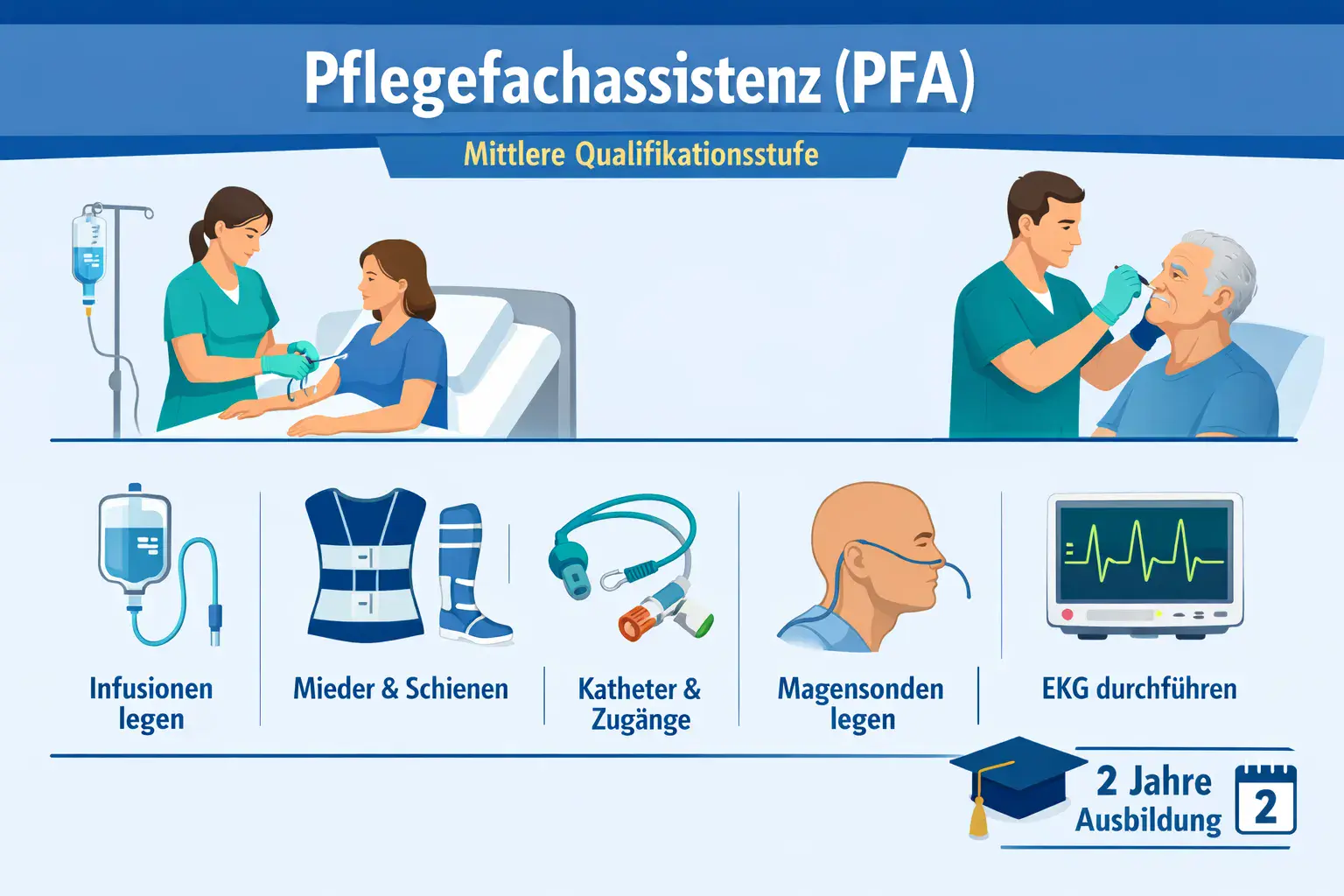
Typical tasks of the PFA:
- Placing infusions
- Applying and putting into operation corsets, orthoses, and splints
- Maintaining the patency of input and output systems as well as removing peripheral venous access lines
- Inserting and removing gastric tubes through the mouth or nose
- Carrying out standardized diagnostic procedures such as ECG
- Participation in care documentation and support of the DGKP
Training: Training to become a PFA lasts two years and builds on the PA qualification – or can be started directly after completing compulsory schooling. It includes around 3,200 hours of theory and practice.
Registered Health and Nursing Care (DGKP) – The highest qualification level
The DGKP is the highest and most comprehensive qualification level in the Austrian nursing system. Registered health and nursing care professionals bear full professional responsibility for the nursing process – from planning and implementation to documentation and evaluation.
“Registered health and nursing care professionals bear professional responsibility for the nursing process.” — pflege.gv.at
What distinguishes the DGKP from the other professional groups is not only the broader scope of duties – it is the personal responsibility. A DGKP makes professional decisions independently, coordinates the entire care team, and is at the same time the contact person for doctors, relatives, and the people in need of care themselves.
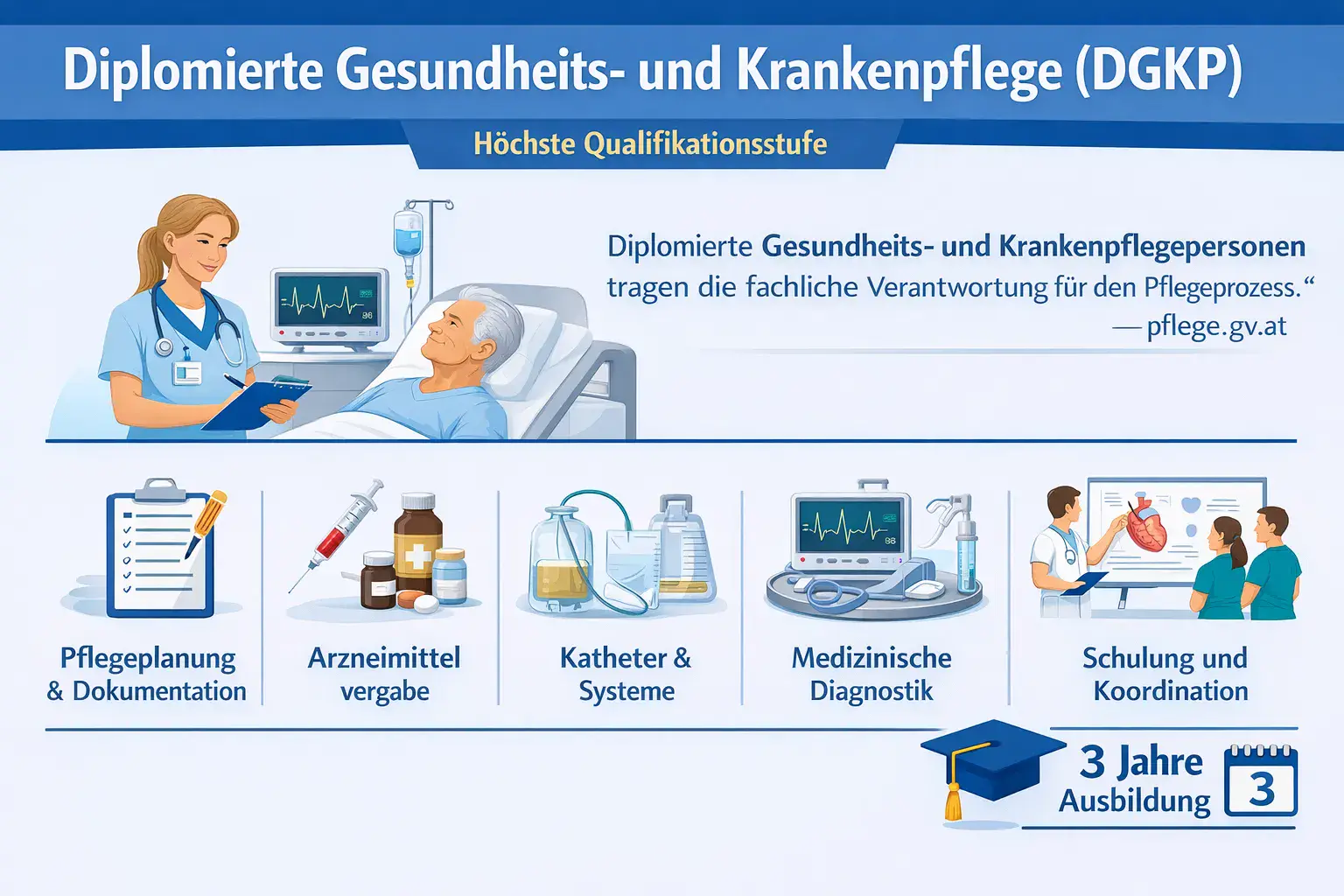
Typical tasks of the DGKP:
- Independent care planning, implementation, and documentation
- Medication administration and therapeutic measures
- Care of input and output systems
- Participation in medical diagnostics and device-assisted monitoring
- Training and instruction of PA and PFA
- Coordination of the entire care team
- Communication with female doctors, male doctors, and relatives
Training: Training to become a DGKP lasts three years and is very comprehensive both theoretically and practically. Alternatively, for several years now there has also been the option of obtaining the DGKP qualification through a bachelor's degree program at a university of applied sciences – a path that is particularly interesting for people with academic ambitions.
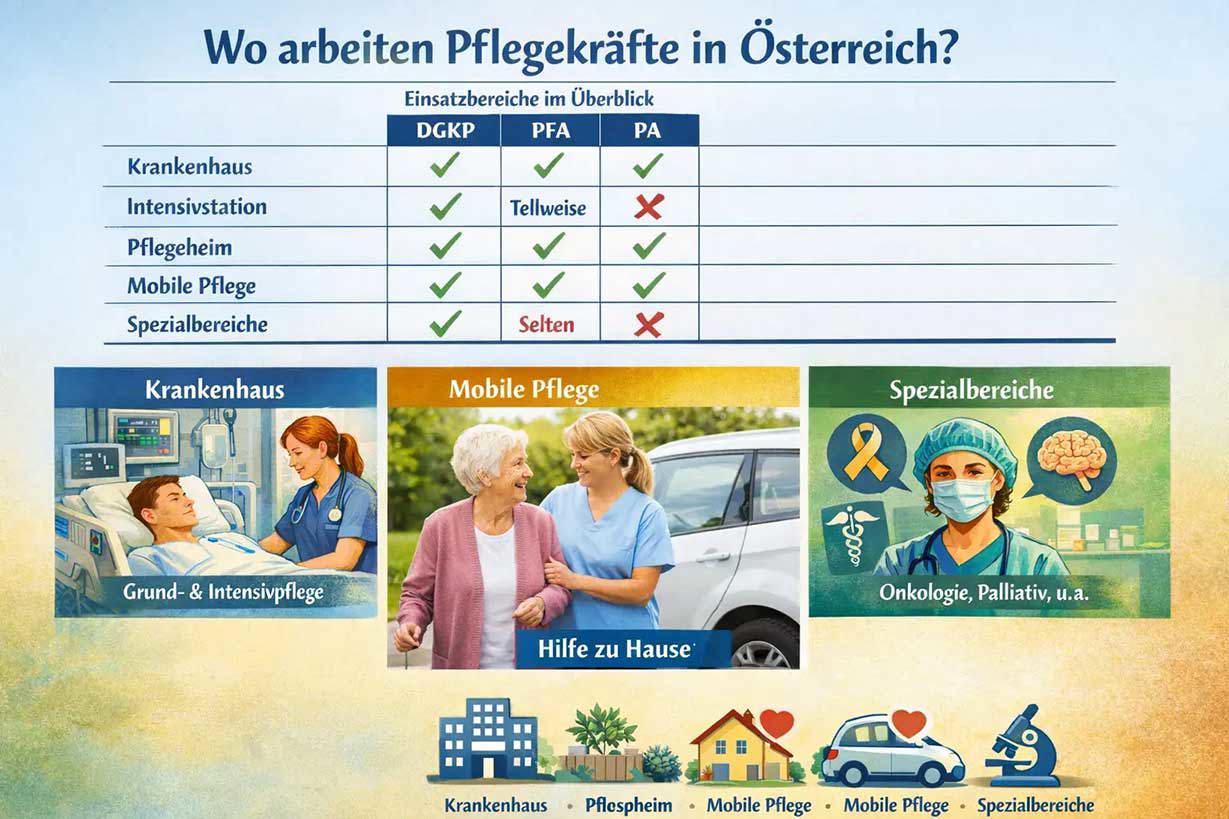
Care workers in Austria work in very different areas – depending on training, specialization, and personal interests. The Austrian care system is structured in such a way that all three professional groups (PA, PFA and DGKP) together make comprehensive care possible – from basic care to highly specialized medical support.
Overview of areas of work by qualification
Source: Health and Nursing Care Act (GuKG), gesundheit.gv.at – status 2026
Hospital – Care in the medical center
In hospitals, all three professional groups work closely together. Here, care takes place on several levels – from basic care to specialized acute care.
Typical tasks:
- Support with personal hygiene and mobilization (PA)
- Carrying out nursing and medical measures (PFA)
- Care planning, coordination, and responsibility for the entire care process (DGKP)
Special feature:
Hospitals are often the place where care and medicine work together most closely. Teamwork is crucial here – between care workers, doctors, and therapists.
Intensive care unit – Highly specialized care
The intensive care unit is one of the most demanding work areas in nursing. Here, patients with life-threatening illnesses are cared for.
Who works here?
- Primarily DGKP with specialization in intensive care nursing
- PFA in a supporting role, depending on the institution and qualification
- PA generally not deployed
What makes this area special?
- Use of modern medical technology
- Continuous monitoring of patients
- Quick decisions and high responsibility
This area requires not only expertise, but also strong mental resilience.
Nursing home – Support in everyday life and old age
Nursing homes are central institutions of long-term care. Here, care workers often support people over a longer period – sometimes for years.
Focus areas:
- Support in everyday life and with personal hygiene
- Activation and social support
- Support for chronic illnesses or dementia
Important to know:
PA and PFA in particular are in high demand here, as they ensure daily care. DGKP additionally take on professional leadership and care planning. Care in a home often means: relationship rather than just treatment.
Mobile care – Support at home (growing field)
Mobile care is one of the most important and fastest-growing fields in Austria. Here, care workers visit people directly in their homes – where they feel most comfortable.
Typical tasks:
- Support with personal hygiene and everyday life
- Medication administration and wound care
- Advice for relatives
- Promotion of independence
Why this field is becoming increasingly important:
- Many people want to stay at home in old age
- Relief for relatives
- More individualized care
This is where noracares comes in: If you are looking for support as a family or want to work flexibly as a caregiver, noracares connects you directly with the right people – simple, transparent, and without complicated structures.
Especially in mobile care, trust is crucial – and this is exactly where noracares creates a personal connection between caregiver and family.

Specialized areas – Care with focus and expertise
In addition to the classic workplaces, there are specialized areas in which DGKP in particular work.
Examples:
- OR nursing (surgical assistance)
- Oncology (cancer treatment)
- Palliative care (end-of-life support)
- Psychiatry
- Rehabilitation
Why specialization is important:
- Higher expertise
- More responsibility
- Often better career and salary opportunities
Many caregivers consciously choose a specialization after a few years of professional experience.
Guidance for you: Which area fits?
If you are still unsure which area suits you, ask yourself these questions:
- Would you rather work in a medical-technical field → Hospital / intensive care
- Do you value long-term care & relationships → Nursing home
- Do you want to work flexibly & independently → Mobile care
- Are you looking for professional depth & specialization → Specialized areas
An internship or trial day can help you find your path – often more than any theory.
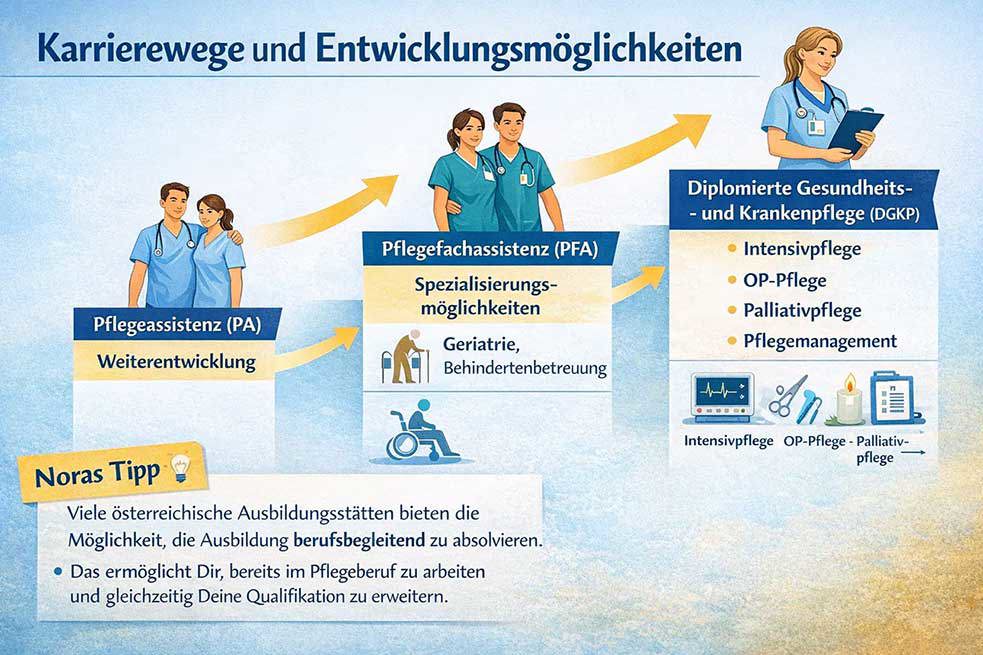
Development opportunities in the care sector
The care sector in Austria is clearly structured and offers you transparent career paths. You can build step by step – from nursing assistant to leadership positions or specialized fields.
Overview: Career paths in nursing
Source: GuKG, sozialministerium.at – status 2026
Step by step toward a higher qualification
The Austrian care system enables you to advance in a clear and practical way:
- Starting as PA: You gain your first practical experience in care and work closely with people.
- Advancing to PFA: You take on more responsibility and may independently perform certain medical activities.
- Advancing to DGKP: You reach the highest qualification level with full professional responsibility for the care process.
Each level expands not only your professional skills, but also your career opportunities – from direct care to coordination and specialization.
Specialization and career after DGKP
After training as a DGKP, numerous further training and specialization opportunities are open to you:
- Intensive care
- Anesthesia and OR nursing
- Palliative care
- Psychiatric care
- Wound management
- Nursing management and leadership functions
These further training courses are usually certified in Austria and are often a prerequisite for specialized or leadership positions. They enable you not only to deepen your expertise, but also to enjoy better career and salary prospects.
Academic paths and leadership career
In addition to traditional further training, you can also pursue an academic path:
- Bachelor’s degree in health and nursing care
- Master’s programs in nursing science or nursing management
- Leadership positions such as ward manager or nursing service manager
This gives you the opportunity to develop in the long term outside direct care as well – for example in management, teaching, or project work.
Learn flexibly: Part-time training
Many training institutions in Austria offer part-time models. This means: You can already work in the care sector while continuing your qualifications at the same time.
This is especially helpful if you:
- need financial security
- want to combine family and training
- or want to gradually grow into higher qualifications
Why a career path in nursing is worthwhile
The care sector is one of the few professional fields in which advancement is clearly structured and secure in the long term.
- High demand in all federal states
- Stable employment opportunities
- Clear advancement systems
- Diverse specializations
This means for you: You can shape your path individually – depending on your life situation, interests, and goals.
“Care and social support professions are of central importance for security of care provision in Austria.” — Federal Ministry of Labour, Social Affairs, Health, Care and Consumer Protection
The nursing labor market in Austria is developing dynamically and is one of the most stable professional fields in the healthcare sector. At the same time, one thing is clear: The demand for qualified caregivers is rising continuously – and will continue to increase in the coming years.
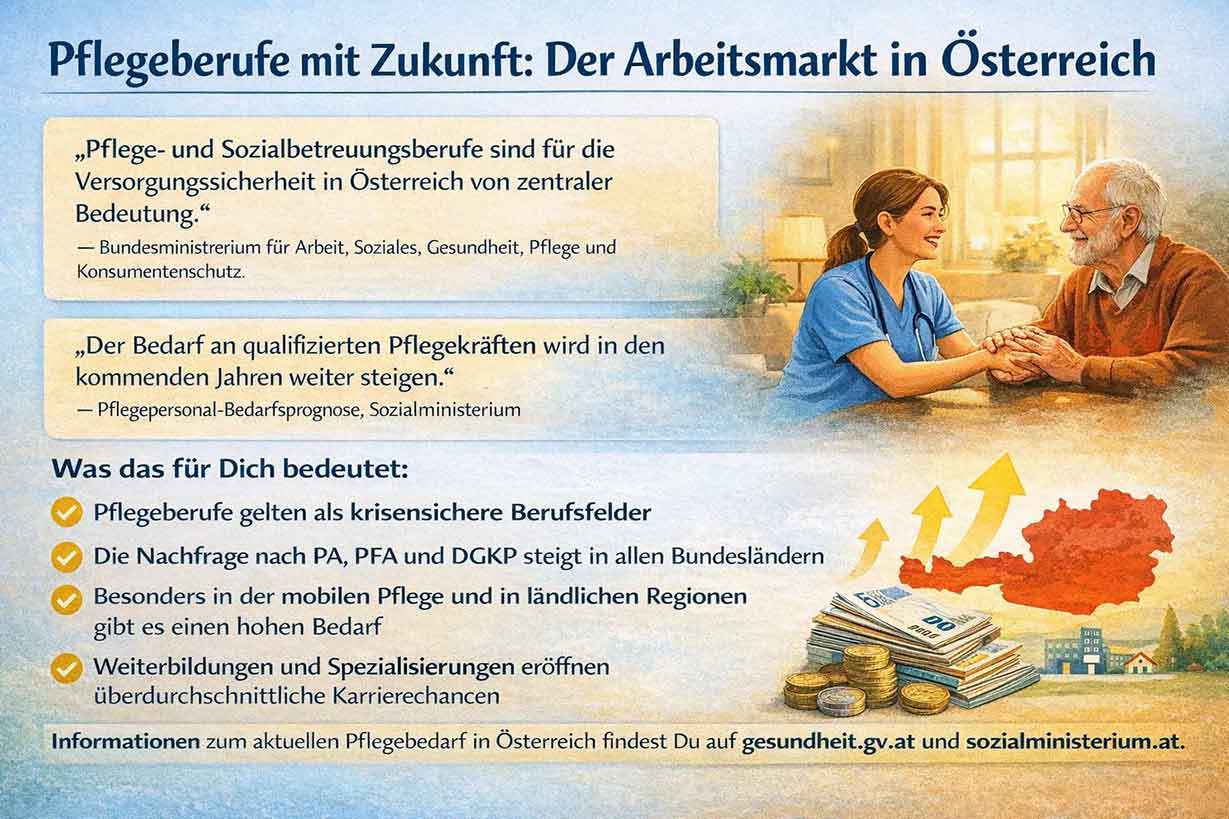
Are nursing professions in demand in Austria?
Yes – more than ever. Nursing professions are among the most in-demand professions in Austria.
- According to current forecasts from the Ministry of Social Affairs, around 75,000 additional caregivers will be needed by 2030 (Please check for 2026: updated figure depending on the report).
- Already today, many regions have more open positions than available skilled workers, especially in long-term care and mobile care.
- Demographic change means that the proportion of people over 65 is steadily rising – and with it the need for care.
This development affects all qualification levels:
- Nursing assistant (PA)
- Nursing specialist assistant (PFA)
- Qualified health and nursing care (DGKP)
Why demand continues to grow
The growing demand for caregivers has several causes:
Demographic change
Austria’s population is getting older. More and more people need long-term care, especially in the area of chronic illnesses and dementia.
Shift toward home care
A large part of care is increasingly taking place at home. Mobile care is growing strongly because many people want to remain in their familiar environment for as long as possible.
Shortage of skilled workers in healthcare
Even today, many positions remain unfilled. Particularly affected are:
- rural regions
- mobile care services
- nursing homes
Rising demands on care quality
More complex medical conditions and medical developments increase the need for well-trained skilled workers – especially DGKP.
Where caregivers are especially in demand
Demand is not distributed equally across all areas. There is currently particularly high demand in:
- Mobile care: One of the fastest-growing sectors in Austria
- Long-term care (care homes): High demand due to an aging population
- Hospitals: Especially in specialized areas such as intensive care
- Rural regions: Significantly greater shortage of skilled workers than in cities
Your opportunities in the care sector
For you, this development means one thing above all: very good and long-term prospects.
- High job security in all federal states
- Quick entry into the profession possible
- Clear advancement opportunities (PA → PFA → DGKP)
- Good opportunities for specialization and further training
- Opportunity to work flexibly – e.g. in mobile care
Care and the future: A profession with development potential
“The need for qualified care workers will continue to rise in the coming years.” — Care workforce demand forecast, Ministry of Social Affairs.
Care is no longer just a traditional support profession. Digital documentation, new care concepts, and specializations are continuously changing the professional profile and opening up additional development opportunities.
Getting started and networking with noracares
Especially in a labor market with high demand, it is important to find the right opportunities.
noracares supports you with this, by connecting you directly with families in Austria – transparently, flexibly, and without detours. Especially in mobile care, this opens up new opportunities for you to shape your workday independently.
If you are already working in care or planning your entry, you can use noracares to find suitable work opportunities and actively shape your next career step.
Austria is one of the countries with a particularly high demand for qualified care workers – and it is also specifically targeting international skilled workers. If you have training in the care sector or would like to work in care, your opportunities in Austria are currently very good.
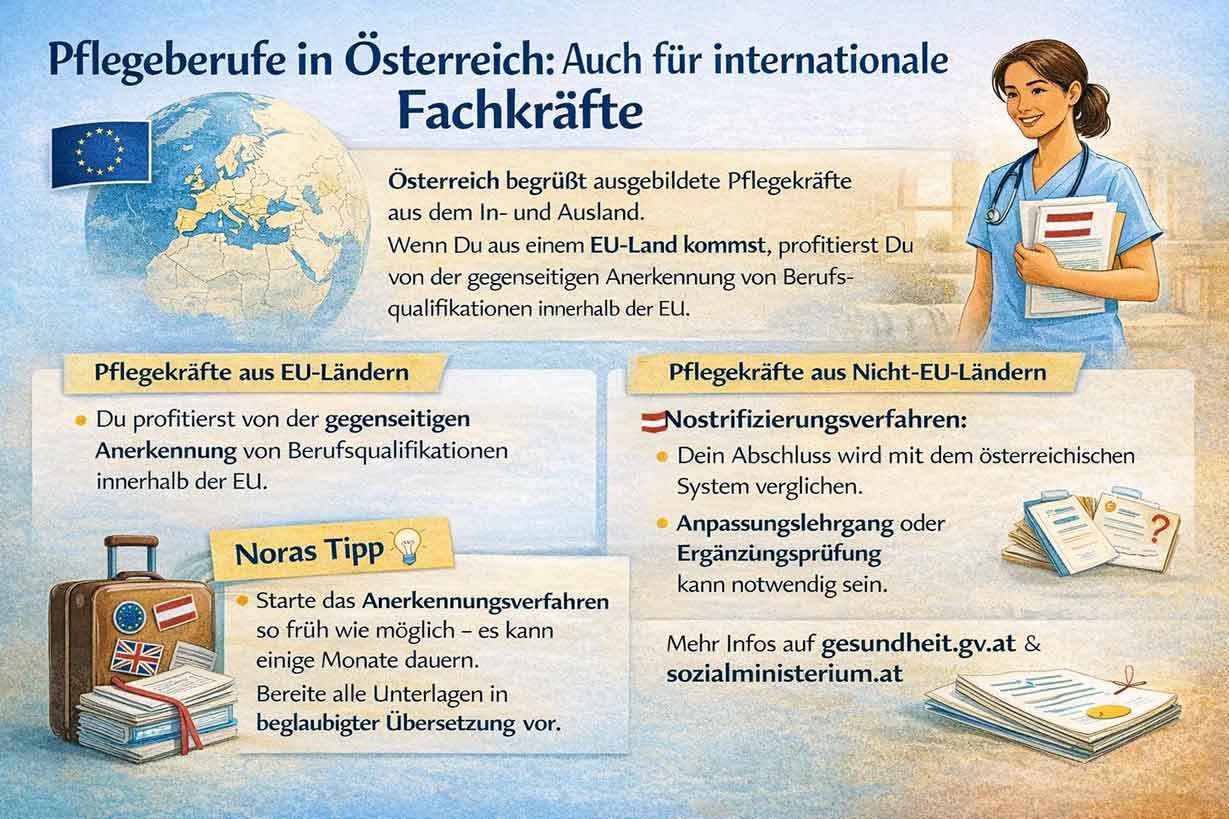
Working in care in Austria – Your opportunities
Care professions are legally regulated in Austria and recognized throughout the EU. At the same time, active efforts are being made to integrate international skilled workers and make entry easier:
- Care workers are among the shortage occupations in Austria (as of 2026)
- There are simplified procedures for recognizing foreign qualifications
- Programs for integration and language support are being continuously expanded (Please note there are regional differences)
Recognition for EU citizens
If you come from an EU or EEA country, you benefit from the mutual recognition of professional qualifications within the EU.
This means specifically:
- Your qualification is recognized directly in many cases
- You can enter the profession relatively quickly
- Usually only formal steps are required – such as registration or proof
The legal basis is the EU Professional Qualifications Recognition Directive, which is implemented in Austria. You can find more information at gesundheit.gv.at.
Recognition for non-EU professionals: The nostrification procedure
If you come from a third country, recognition takes place through the so-called nostrification procedure. Your qualification is compared with Austrian training. Depending on the result, the following may be necessary:
- Adaptation period in an Austrian care facility
- Supplementary examination for missing training content
- Proof of German language skills – usually B2 level
- Submission of certified and translated documents
Depending on the federal state, the responsible bodies are located at the relevant authorities or universities of applied sciences. You can find current information at sozialministerium.at.
Residence rights: Which permit fits?
For non-EU citizens, a residence permit is also required. The most common options for care workers are:
- Red-White-Red Card – for skilled workers in shortage occupations
- Red-White-Red Card Plus – after extension, with expanded access to the labor market
Since care professions are regularly included on the official list of shortage occupations in Austria, access to the labor market is significantly easier for qualified care workers. (Source: sozialministerium.at – as of 2026)
How long does recognition take?
The duration of the recognition procedure depends on your origin and the documents submitted:
- EU qualifications: often a few weeks to months
- Non-EU qualifications: several months, depending on documents and any compensatory measures
Your opportunities as an international care worker in Austria
Thanks to the high demand and the clear structure of the care system, you have very good prospects in Austria:
- High demand in all federal states
- Wide range of employment opportunities – hospital, care home, mobile care
- Clear career paths from PA to PFA to DGKP
- Long-term job and development security in a crisis-proof professional field
International skilled workers are an indispensable part of care provision, especially in mobile care and long-term care.
Your next step with noracares
After successful recognition, the next question often arises: Where can I find suitable opportunities?
noracares helps you connect directly with families in Austria – transparently, simply, and without hidden fees. Especially for international care workers, noracares offers clear guidance when starting everyday care work in Austria and helps you quickly gain practical experience.
Register now for free at noracares.at and start your next step in care.

You now have a clear overview of the most important care professions in Austria – and you know how care assistance, specialized care assistance, and registered nursing differ from one another.
Care is not a single profession, but a clearly structured system with different levels of responsibility and real development opportunities. This very structure makes the care sector in Austria so transparent – and offers you different entry and career paths, no matter where you currently stand.
Whether you are considering entering care, advancing your career, or coming to Austria as an international skilled worker – the first step is always the same: understanding how the system is structured. That is exactly what you now have.
From here, you can move forward in a targeted way – learn more about training paths, find out about specializations, or discover concrete job opportunities.
And if you are already qualified and planning your next step – noracares connects you directly with families in Austria. Transparent, personal, and without hidden fees.


- GuKG (Health and Nursing Care Act) – The central Austrian law that regulates the professional rights, tasks, and duties of all care professions. It forms the legal basis for the distinction between PA, PFA, and DGKP.
- DGKP (Registered Health and Nursing Care Professional) – Highest qualification level in Austrian care. Bears independent responsibility for care planning, implementation, documentation, and team coordination.
- PFA (Specialized Care Assistance) – Intermediate qualification level with expanded competencies. May independently carry out certain medical measures, for example starting infusions or performing an ECG.
- PA (Care Assistance) – Entry level of Austrian care. Supports basic care and support measures under the supervision of a PFA or DGKP.
- Nostrification – The formal recognition procedure for foreign care qualifications in Austria. The qualification is compared with Austrian training – depending on the result, this is followed by an adaptation period or a supplementary examination.
- Red-White-Red Card – Austrian residence permit for qualified skilled workers from third countries in shortage occupations, which regularly include care professions.
- Mobile care – Support and care of people directly in their own homes by qualified care workers. One of the fastest-growing sectors in the Austrian care system.
- Collective agreement – Collective wage agreement in Austria that regulates minimum salaries and working conditions for care workers. It is considered a benchmark for fair pay in the care sector.
- EU Professional Qualifications Recognition Directive – European regulation that enables the mutual recognition of professional qualifications within the EU – including for care professions.
- noracares – Digital platform that connects qualified care workers directly with families in Austria – transparently, without placement fees, and with full control over their own work situation.

