How does your company benefit from flexible nursing staff?
Shortage of nursing staff? With flexible solutions, you can find the right employees quickly and easily. Learn how flexible nursing staff can give your company a competitive edge.

The care sector is about far more than just numbers and efficiency – it's about people, their care, and their well-being. But we know that everyday life in care often brings unforeseen challenges. Sudden staff shortages, seasonal peaks, or a steadily increasing need for care can quickly become a strain.
We know how tough and, above all, difficult to manage this is. But we assure you that as a business owner, you are not alone in these moments. Flexible caregivers are the helping hand that steps in when things get tight and provides relief – whether for short-term shortages or regular assignments. We know how important it is to react flexibly without compromising the high quality of care your patients deserve.
In our article, we show you how flexible work models can help you work more efficiently, reduce costs, and at the same time create the foundation for successful and compassionate care in the long term.
The Importance of Flexible Care Workers for Operational Flexibility

The care sector faces many uncertainties that pose challenges for companies. Unpredictable absences of permanent staff, fluctuating care needs, and seasonal peaks require quick and efficient solutions. Especially during times when it is crucial to ensure uninterrupted care, a sudden staff shortage can become a serious problem. These uncertainties often bring additional burdens and can negatively impact the well-being of both clients and employees.
This is where flexible caregivers come into play. They are like a well-oiled cog in an otherwise complex clockwork mechanism. They enable companies to adapt quickly and easily to changing requirements – without lengthy downtimes or costly bottlenecks. This flexibility is the key to competitiveness: If a company can adapt quickly to new situations, it remains efficient and stable even in turbulent times.
Cost savings through flexible working models

Imagine your company could shed the high costs of overtime and permanent staffing like a heavy backpack and instead only pay for what's truly needed. That's exactly what flexible caregivers make possible. By employing them in a targeted and needs-based manner, financial costs can be significantly reduced: no more unnecessary overtime, no long-term commitments – instead, you only pay for the care that's actually required.
This approach not only ensures an optimized cost structure but also increases efficiency. Caregivers can be deployed flexibly during peak periods or in the event of short-term absences, thus avoiding downtime and increasing the productivity of the entire company.
Costs in comparison
A look at the figures shows how effective this approach is: Compared to permanently employed caregivers, flexible work models can save an average of up to 20 percent in personnel costs. This is because companies only pay when care is needed – without unnecessary staffing or the costs of overtime and additional services. This not only saves money but also increases operational efficiency without compromising the quality of care.
According to estimates, the savings* could therefore look like this:
*Savings are highly dependent on individual circumstances, such as hourly wages and sick leave days.
By strategically deploying flexible caregivers, companies can achieve significant cost savings without compromising the quality of care.
How can flexible caregivers reduce costs for my company?
Flexible caregivers reduce costs because companies only pay for actual hours worked. This eliminates unnecessary overtime and fixed personnel costs, while ensuring care is always provided, resulting in efficient resource utilization.
Long-term benefits of flexible care workers for care companies

The use of flexible caregivers is not only a short-term solution for sudden shortages, but also offers long-term benefits for the strategic direction and growth of your care business. Flexibility in workforce planning strengthens a company's resilience to future uncertainties. The ability to schedule caregivers according to demand increases planning reliability and simultaneously improves morale within your company.
By avoiding fixed employment costs and being able to respond flexibly to fluctuating demand, companies can react more quickly to market changes. This not only effectively combats the shortage of skilled workers but also supports the development of new business models and offerings.
In summary, the targeted deployment of flexible care workers not only ensures efficient care planning, but also helps companies remain competitive in the long term and achieve sustainable success.
Advantages of flexible employment for caregivers
Flexible working hours in nursing offer caregivers an ideal balance between work and private life. Whether early bird or night owl – flexible work models allow them to choose shifts that perfectly fit their lifestyle.
Freelance caregivers also enjoy the freedom to plan their assignments themselves and tailor them specifically to their personal needs. This leaves more time for family, hobbies, and relaxation – a crucial advantage in a demanding profession. Temporary work in the care sector and platforms for placing caregivers make entering this form of employment easier than ever. Flexibility not only increases job satisfaction but also motivation, which has a positive impact on the quality of care.
Flexible Caregivers and Quality of Care

Flexible nursing staff make a significant contribution to maintaining high-quality care, even during times of changing demands. They enable organizations to react quickly and flexibly to unforeseen shortages without compromising the quality of care. By being able to work in different shifts and areas of responsibility, they bring fresh perspectives and new approaches to care facilities.
It is important that care companies have clear standards and regular training (for example
Legal considerations regarding the employment of flexible care workers

Casual employment is particularly well-suited for flexible work arrangements. Here, caregivers are hired based on individual needs, such as short-term absences or seasonal fluctuations. This form of employment allows companies to deploy care staff in a targeted and needs-based manner without making long-term commitments.
The legal framework for this type of employment requires a clear agreement on working hours and conditions to meet both the needs of the caregivers and the company's objectives. Therefore, you should pay attention to the following points:
- Design employment contracts clearly:
- Consider social security and tax law: Flexible caregivers must be correctly treated in Austria socially insured will be, even if they only work on an on-call or temporary basis. Tax and social security regulations are also important for freelance caregivers. Seek advice from a tax advisor or lawyer.
- Combining flexibility and rights: If you offer flexible working hours, ensure that the rights of caregivers are respected, e.g. regarding holidays or sick leave. Flexible working arrangements must not be to the detriment of employees.
- Documentation and Transparency: Document all agreements in writing and ensure transparent communication with flexible caregivers. This protects both sides from misunderstandings and legal problems.
Further information and tips on the topic of working agreements and the legal aspects of flexible working can be found at the Employment Agency.
noracares as an interface for companies and caregivers
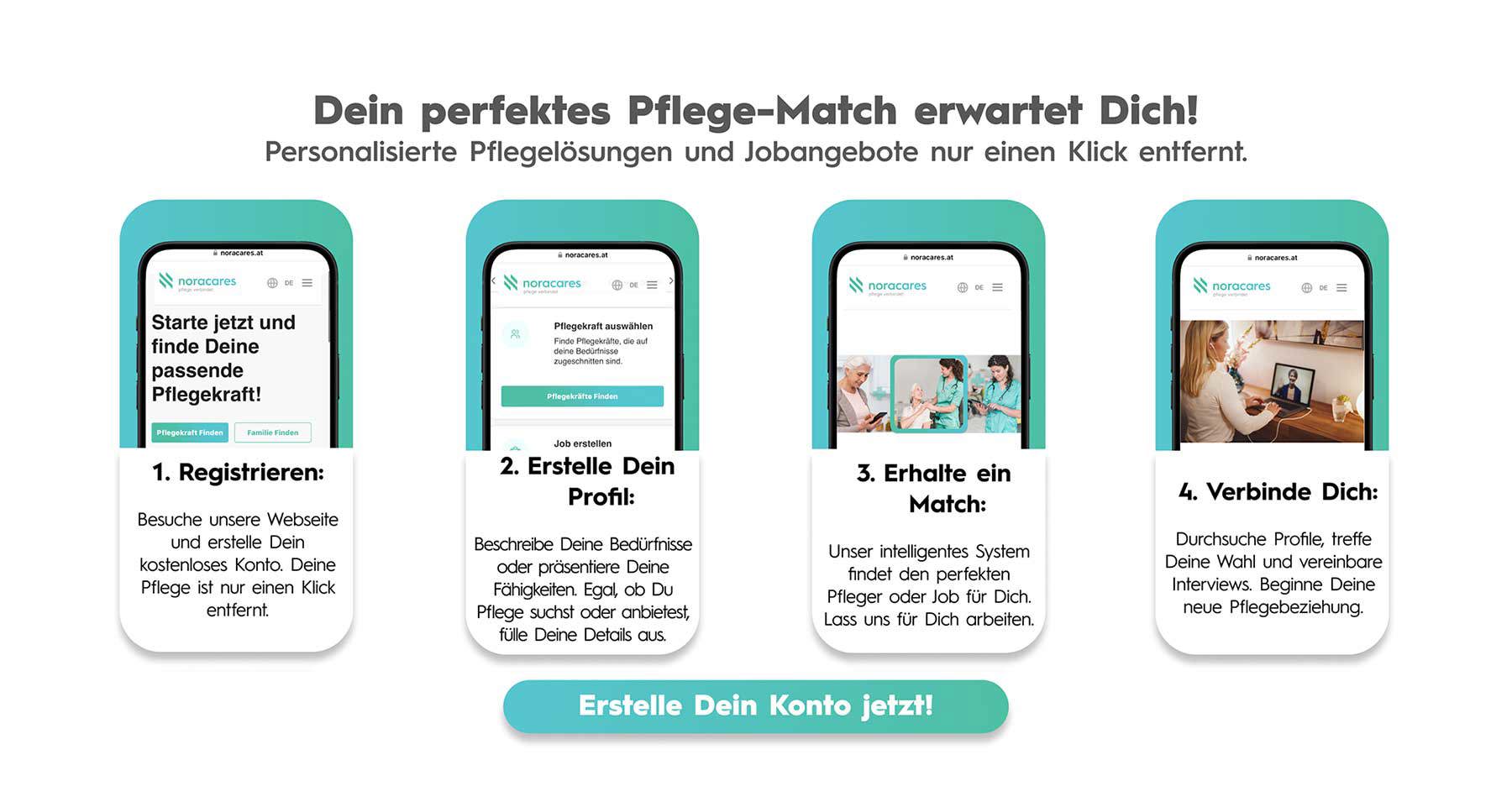
In business management, it is crucial to be able to react quickly and flexibly to changes – especially when it comes to care needs. noracares plays a key role here by acting as an interface between companies and qualified caregivers.
The platform makes it easier for companies to access a wide selection of caregivers who are not only qualified but also flexibly adapt to the specific needs and requirements of the company and its clients – whether for short-term assignments in case of sudden absences or for long-term, regular support. This flexibility ensures that companies always receive precisely the support they need without tying up unnecessary resources during periods of lower care demand.
Here's how it works
The process of finding the right caregivers for your company at noracares is simple and straightforward. It all starts with registration on the platform.
- Registration: With just a few clicks you can Register your company with noracares.
- Profile create: You can then add a
- Needs assessment: The next step involves a detailed needs analysis, which identifies which caregivers are required – whether for emergencies, long-term support, or regular care at flexible times.
- Placement:Based on the specified criteria, the intelligent matching system will suggest suitable caregivers within a very short time who perfectly match the requirements of your company.
- Get to know us: You can get to know the caregivers via chat or video call and find out if they are a good fit for your company's requirements.
- Use and support: If it suits both sides, the caregivers start their shifts and flexibly adapt to the company's working time requirements.
With noracares, you can ensure that your company always finds the exact caregivers who meet your needs, without having to go through lengthy processes. Flexibility, efficiency, and quality – these are the strengths of noracares that help your company gain a competitive edge.
Practical example
A practical example from the healthcare sector shows how flexibly deployed caregivers can make a real difference: A nursing home in Vienna struggled with sudden staff shortages during a flu season. The need for care rose rapidly, while at the same time the number of available skilled workers plummeted. Thanks to noracares, the nursing home was able to deploy several qualified, flexible caregivers within a very short time, who filled precisely the gaps created by the absences. This allowed the nursing home to continue providing high-quality care without compromising on quality, while maintaining uninterrupted operations.

The care sector faces constantly changing challenges – from unforeseen staff shortages to seasonal fluctuations in care needs. But like a flexible hinge that functions smoothly even in turbulent times, flexible care workers can steer your business through unforeseen bottlenecks and sudden demands. They not only ensure uninterrupted care but also enable your organization to operate more efficiently and save costs.
With noracares as your partner, you can find precisely the support your company needs – flexible, tailored to your requirements, and fast. Benefit from a flexible staffing model that optimizes your resources and strengthens your competitiveness.
Act now and secure a competitive advantage!
Are you ready to future-proof your business while saving costs? target="_blank" rel="noopener noreferrer" href="https://www.noracares.at/authorization">Register with noracares and find exactly the caregivers you need for your business. Take advantage of flexible solutions – for an even more efficient and stable future.
Nora's Frequently Asked Questions (FAQs)

