Christmas in nursing care: Practical tips and creative ideas for everyone

Christmas in caregiving is a time full of lights, scents, and memories, but also full of challenges. While the world outside shines with candlelight, the daily routine in nursing homes, hospitals, or at home often looks different: caregivers struggle with shift work, care recipients feel lonely, and family members wonder how they can celebrate a meaningful holiday despite caregiving responsibilities.

Especially during the holidays, duty and longing collide – the need for rest, family, and tradition on one side and the indispensable task of caregiving on the other. But this is also where a special opportunity lies: with the right ideas, some planning, and a lot of heart, Christmas in caregiving can become a time that brings joy, creates closeness, and benefits everyone involved.
In this article, you will learn:
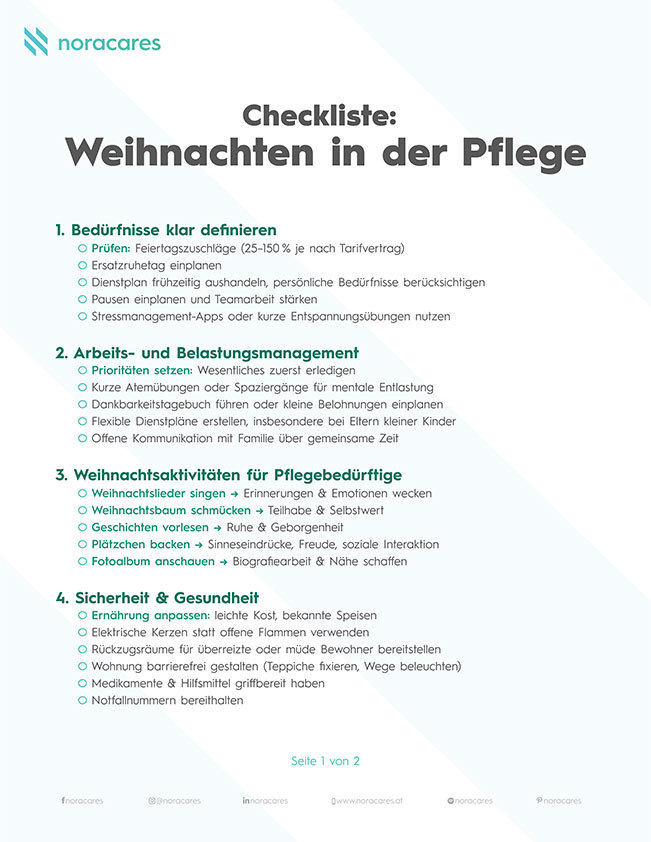
- The rights caregivers have at Christmas – from bonuses to work schedules.
- How care recipients can experience festive warmth and community despite their limitations.
- Tips for family members to avoid stress, maintain dementia sensitivity, and have a relaxing Christmas.
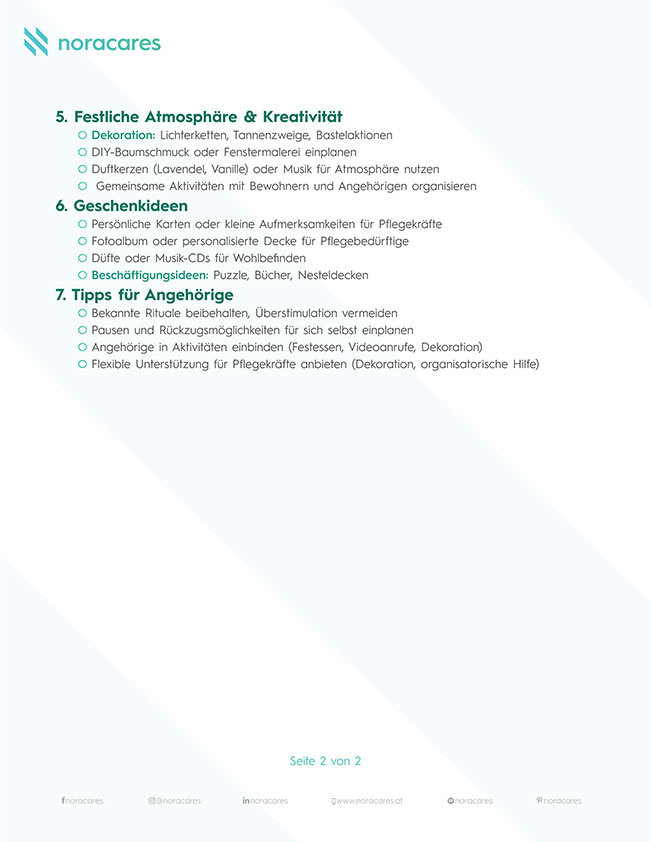
- And a checklist & FAQ that provides practical guidance and immediately actionable ideas.
So that Christmas in caregiving is not just a burden, but becomes a celebration of connection, humanity, and small moments of happiness.
Christmas – for many a celebration of contemplation, but for caregivers a time full of challenges. While others enjoy the holidays with their loved ones, caregivers face the task of balancing work, family, and the high demands of this special time.

Work-life balance
The question of how holiday shifts and family time can be reconciled occupies many caregivers. The duty schedules during Christmas time often require sacrifices, as the need for care does not end on holidays.
It becomes particularly difficult when small children are involved, who look forward to spending time with mom or dad. Caregivers feel torn: on the one hand, the desire to make the holiday special for the residents and care recipients, and on the other hand, the longing to be with their own family.
Emotional and physical stress
The holidays often bring a wave of intense emotions – both for the care recipients and the caregivers. Residents of care facilities miss their relatives or mourn past Christmas celebrations, which can darken the mood. For caregivers, this means being not only physically present but also emotionally available: offering a friendly smile, providing comfort, and managing the daily work routine at the same time.
The physical demands do not decrease but can increase due to holiday preparations, special events, and increased care needs. This double burden often leads to exhaustion – especially when the stress of the Advent season has already drained the caregiver's energy.
Higher workload and staff shortages
The Christmas season in caregiving is often marked by a thin staff and an increased need for care. Holiday shifts are hard to fill, and the absence of colleagues due to vacation or illness makes the situation even more challenging.
Caregivers often have to take on more tasks, arrange shifts flexibly, and maintain their professionalism at all times. This is compounded by the expectations of residents and their families, who desire a special Christmas celebration. The result: stress and time pressure, which need to be managed without losing sight of what is essential – the well-being of the care recipients.
The pressure to make Christmas unforgettable
Caregivers often feel a great inner pressure to provide care recipients with an unforgettable Christmas in the nursing home. They know how important such moments are for older or sick people, especially for those who cannot see their families. But the desire to give everyone a special holiday can quickly lead to overwhelm, especially when resources and time are scarce.

Caregivers do amazing work at Christmas, and their efforts should not go unrecognized. There are rights and benefits specifically aimed at improving working conditions during the holidays. Knowing these is crucial for getting through the festive season despite the pressures.
“Don’t let yourself be exploited – know your rights, even when you are working during the holidays.” – Source: pflegekraft-mehralseinberuf.de – Work at Christmas
Source: Working Time Act (ArbZG §§9/10), Collective Agreements
Plan breaks together with your colleagues, because only those who take breaks can stay productive in the long term.
Negotiate fair work schedules
A fair work schedule is essential for caregivers working at Christmas. Especially during this time, it is worthwhile to start the conversation early with colleagues and management. A balanced plan takes into account personal needs as well as business requirements – so caregivers can better use their free time, whether for family, relaxation, or their own Christmas traditions.
Working at ChristmasWorking at Christmas is often a balancing act for caregivers between professional responsibility and personal needs. With the right strategies, this challenge can be managed without losing energy or the joy of Christmas.

Tips for managing the workload during the holidays
The Christmas season in caregiving is often marked by hustle and additional tasks. To handle the pressure, small but effective measures can help:
- Set priorities: Not everything needs to be done immediately. Focusing on what is essential can significantly reduce stress.
- Strengthen teamwork: Sharing tasks among the team provides relief and strengthens the sense of community.
- Use short breaks: Even a few minutes of rest can work wonders to recharge.
- Stress management apps: Apps like Calm or Headspace offer short relaxation exercises and guided meditations for moments of stress.
- Self-care is not a luxury, but a necessity to meet high demands.
Emotional coping strategies for the holidays
Psychological stress is often higher at Christmas. With these action-oriented tips, you can strengthen your resilience:
- Short breathing exercises: Just a few minutes of targeted breathing exercises can reduce stress and improve concentration.
- Positive rituals: A short walk before or after the shift can help clear your mind.
- Gratitude journal: Write down three things each day that you are grateful for – a simple way to lift your mood.
- Prioritize self-care: Treat yourself to small rewards after work, such as a nice meal, a hot bath, or a movie.
Create flexible and fair work schedules
A well-thought-out work schedule is the foundation for a relaxed holiday – as much as possible in the caregiving routine. The schedules should be created early to allow employees to plan ahead.
Agreements within the team, where personal wishes and obligations are considered, create an atmosphere of cooperation. When everyone takes on some responsibility, even challenging holiday shifts can be distributed more fairly. Especially for parents of young children, a solution can usually be found so that the gift exchange doesn’t have to happen without mom or dad.
Effective communication with family members
For caregivers working during the holidays, open and honest communication with their own family is indispensable. Clear agreements about when and how to spend time together help avoid disappointments. Perhaps Christmas dinner can be rescheduled (e.g., a Christmas breakfast) or a new ritual can be developed that fits the work schedule. What matters is that the family and caregiver find ways to make the holidays valuable despite the special circumstances.
Christmas is a time full of memories, lights, and scents – but also a time when loneliness can be particularly noticeable. For care recipients, the festive season can trigger mixed emotions: joy, nostalgia, but also sadness. Therefore, it is even more important to offer warmth, closeness, and community.

Relieving loneliness
Shared activities help to avoid isolation and strengthen feelings of security. Even small rituals or encounters can make the day livelier and safer for care recipients.
Creating sensory Christmas moments
Health & Safety Considerations
- Adjust diet: Light meals and familiar foods help avoid overloading and intolerances.
- Use only electric candles: Avoid fire hazards, safety is the top priority.
- Create retreat spaces: Overstimulated or tired residents need places to retreat for a short time.
With small, loving gestures and well-planned rituals, caregivers and relatives can ensure that Christmas becomes a moment of joy, security, and community for everyone – even in the care facility.
Christmas evokes memories, offers comfort, and creates special moments – especially in care facilities, where everyday life often seems monotonous for many residents. With a little creativity and a lot of heart, an atmosphere can be created that brings a smile to everyone’s face.

Decoration ideas for nursing homes
A festive decoration transforms even the simplest space into a small Christmas wonder. With string lights, handmade ornaments, and winter window paintings, a warm and cozy atmosphere is created. Fresh pine branches and scented candles with cinnamon or vanilla notes can also appeal to the senses and evoke memories of past Christmases. Crafting activities with the residents, where they create their own decorations, not only make for fun but also strengthen the sense of community. Suitable activities include:
- DIY Christmas ornaments: You can make unique ornaments from salt dough, old buttons, or paper – perfect for crafting with the residents.
- Fairy lights and glass containers: Simply arrange fairy lights in mason jars and fill them with pine cones or baubles – inexpensive and atmospheric.
- Upcycling ideas: Empty bottles can be hand-painted to become vases for pine branches. Old fabric scraps can be turned into Christmas garlands.
- Window painting: Winter motifs can be drawn on the windows with washable chalk markers – even wheelchair users can participate actively.
Organization of Christmas activities for residents
Christmas is time for experiences! Baking cookies together, reading classic Christmas stories, or listening to old Christmas carols not only creates variety but also emotional connections. Musical evenings are particularly popular, where staff or external guests sing Christmas carols together with the residents. Such activities bring light into the dark season and give many people new energy. But baking cookies or telling Christmas stories are also very well received.
Involving families in festive celebrations
Christmas is the time for family. To give seniors the feeling of closeness and security, relatives can be actively involved in the celebrations. Whether through shared festive meals, creating a family day, or organizing a Christmas market on the grounds – such events promote connection between residents, families, and caregivers. Video calls for relatives who cannot be present can also create a beautiful experience.
Virtual family connections using technology
For many residents, contact with their family members during the holidays is especially important. Virtual connections, whether through video calls or digital holiday cards, allow loved ones to come together and celebrate, even if they are far apart.
The Christmas season at home can be especially beautiful for people in need of care and their relatives, but it can also be challenging. Good preparation ensures that everyone can enjoy the holiday in a relaxed and safe manner.

Preparation & safety
- Make the apartment barrier-free: Fix carpets, light paths well, and remove tripping hazards. This minimizes accident risks.
- Prepare medications & aids: Organize tablets, inhalers, walking aids, or care utensils early so they are always within reach.
- Have emergency numbers ready: Emergency services, family doctor, nursing service – quickly reachable in case of emergency.
Christmas with dementia
“For people with dementia, familiar routines are especially important – keep rituals, but avoid too many stimuli.”
– Source: ppm-online.org – Care of relatives at Christmas
- Maintain familiar rituals: Familiar routines create orientation and security.
- Avoid overstimulation: Quiet music, small groups, calm decoration. This keeps the celebration pleasant and stress-free.
- Plan retreat options: For moments when rest or relaxation is needed, secluded rooms or cozy corners should be available.
With these simple preparations, relatives and caregivers can ensure that Christmas at home will be harmonious, safe, and as pleasant as possible for everyone involved.
Gift ideas for people in need of care
Christmas is the perfect opportunity to give joy. It’s not about expensive gifts, because often small gestures have much greater meaning. Especially personal and appreciative are gifts that evoke memories, appeal to the senses, or actively engage:
- Photo album or personalized blanket: Memories of family, friends, and special moments create closeness and security.
- Fragrances or music CDs: Lavender, vanilla, or favorite music calm, stimulate the senses, and can improve mood and well-being.
- Activity ideas: Puzzles, books, or fidget blankets promote cognitive abilities, provide entertainment, and boost self-esteem.
With these thoughtful gifts, you show appreciation, support daily joy, and make Christmas time especially beautiful for people in need of care.
Christmas is a time for community and appreciation – also for caregivers, who often do so much to make the holiday special for others. With small gestures and thoughtful planning, families can help make this special time more enjoyable for everyone.

Pick up relatives
Spending Christmas time with the family is the greatest gift for many elderly people. Not only can the people in need of care have a wonderful, family-oriented celebration, but caregivers are also relieved.
If it is possible for relatives to take family members home for Christmas, a well-prepared apartment ensures comfort and safety. A non-slip carpet, comfortable seating, and a barrier-free environment create well-being.
How families can support caregivers at Christmas
Show understanding for the challenges of holiday shifts. Flexible visiting hours, a listening ear for their needs, and small help such as taking over organizational tasks can relieve caregivers enormously. Decorating the room can also bring joy to caregivers and lighten their workload.
Gift ideas to show appreciation for caregivers
A thoughtful gift often says more than words. Personal cards, homemade cookies, or a relaxing wellness set show caregivers that their work is appreciated. Such gestures strengthen the bond and bring a smile to their face.
Here you can find more tips for “a thank you to the caregiver”.
A heartfelt thank you to all caregivers who enrich the lives of people in need of care with their commitment and dedication – especially during this festive season. Your tireless effort, patience, and care are invaluable. You provide not only the necessary support but also warmth and security.
Noracares would like to sincerely thank you for your hard work and emphasize how much we appreciate your contribution to society. We know how challenging caregiving can be, and we are proud to have so many competent and empathetic professionals like you. Your commitment, especially during the holidays, makes a real difference. Thank you for being there for the people who need your support during this special time with so much empathy and professionalism.


Christmas in caregiving is far from a given – it means shift schedules, responsibility, and often sacrificing personal traditions. At the same time, this season reveals the heart and humanity in caregiving: a lovingly decorated table, a familiar Christmas song, or a shared smile can do more than big gifts.
Whether you're a caregiver who wants to know your rights while finding small moments of peace, a person in need of care seeking closeness and security, or a family member trying to balance caregiving and family time – there are ways to make Christmas a celebration of warmth and community despite all the challenges.
Use the tips and ideas in this article to make the holidays easier and more beautiful for yourself and others. Pay attention to your rights, plan ahead – and don't forget: It’s the small gestures that have the biggest impact.
Because Christmas in caregiving doesn’t mean making everything perfect, but seeing the special moments that create connection – for caregivers, those in need of care, and their families alike.


- Working Time Act (ArbZG): The legal framework in Germany that regulates, among other things, work on Sundays and public holidays. It mandates that a compensatory rest day must be granted for work on a public holiday.
- Mindfulness: A stress management technique where you focus entirely on the present moment. In caregiving, this helps maintain emotional balance during hectic shifts.
- Accessibility: The design of living or communal spaces to be accessible and safe for people with limitations (e.g., wheelchair, walker) without the need for external assistance.
- Life History Work: An important part of caregiving where the life story of the person receiving care is used to trigger memories. At Christmas, this is often done through old photos or familiar songs.
- Dementia Sensitivity: An approach in caregiving and communication that takes into account the changed perception of people with dementia. The goal is to minimize stress factors (such as loud music or bright lights).
- Shift Planning Authority: The right of the management to set shifts, taking into account social aspects (e.g., children in the household) when planning holiday shifts.
- Respite Care: A collective term for measures (e.g., short-term care or hourly care) that temporarily relieve family caregivers from their duties, allowing them to rest.
- Compensatory Rest Day: A day off granted as compensation for working on a public holiday. It must be granted within a specified period (usually 8 weeks) after the holiday.
- Holiday Bonus: An additional financial compensation for working on public holidays. The amount is often regulated in collective agreements and in Germany is tax-free up to certain limits.
- Resilience: The psychological resilience of caregivers and family members to withstand difficult phases (such as stressful holiday shifts) without long-term impairment.
- Shift Allowance: A financial bonus paid in addition to the base salary when working at unusual times (night, weekends, holidays).
- Overstimulation: A state in which a person receiving care is overwhelmed by too many sensory impressions (loud conversations, flashing lights, many people), often leading to restlessness or aggression.

