Caregiver jobs in Linz: opportunities and application process

Are you looking for a fulfilling job in care – with real meaning, fair pay, and a team that sticks together? Then Linz is exactly the right place for you. Open positions in caregiving are waiting here for dedicated people like you – whether you have experience, are changing careers, or are looking for a part-time job.

Imagine your workday beginning with a ride on the Pöstlingberg railway while the city wakes up below you, or using your break to take a deep breath of fresh air along the Danube promenade. In Linz, your workplace is not just a building, but part of this livable city.
We know: starting a career in care can raise many questions – from working hours, salary, and requirements to everyday life on the job. That is why we offer you transparent information, simple application options, and direct contacts who will support you.
In the Upper Austrian capital Linz opens up a broad range of career prospects for you – from elderly care to supporting people with special needs. The city combines innovation and tradition: modern concepts such as community nursing bring care directly into Linz neighborhoods. In addition, digital care documentation via tablet or app has now become standard with most providers in Linz – which means less paperwork for you and more time for people.
Scroll on and discover current caregiver positions in Linz – including all the important details about salary, weekly hours, and start date. Your new heartfelt job is only a few clicks away.
That was also the case for Lisa from Urfahr. After her parental leave, she was not just looking for any job, but for a role that could be combined with her family life and provide meaning. As a career changer, she had doubts at first – but through noracares she found exactly the nanny position in Linz that suits her.

In Linz, there are numerous opportunities for caregivers who would like to offer their services privately. These roles provide flexibility and the chance to work in an individual and personal environment, whether in home care, supporting people with disabilities, or family care. So you can work in various areas:
Home elderly care:
- Support with daily personal care: As a caregiver, you help people in need of care with personal hygiene, dressing, and cleanliness in order to ensure the well-being of older people.
- Household management: This includes tasks such as cooking, cleaning, and shopping to make everyday life easier for the people being cared for.
- Basic medical care: You take on tasks such as administering medication, monitoring health status, and assisting with doctor visits.
- Mobility: This includes support with movement inside and outside the home, including accompaniment on walks or errands.
- Caregiver jobs: Senior caregiver or care assistant, 24-hour care, Home help
Disability care:
- Promoting independence: As a caregiver, you help people with impairments develop and maintain skills that make everyday life easier and promote independence.
- Help with coping with everyday life: This includes support with daily activities such as eating, dressing, and hygiene.
- Social integration: You support the people in your care in participating in social life, e.g. in leisure activities or social encounters.
- Caregiver jobs: 24-hour care, day care, home help, companion for social or professional activities
· Family care and household help:
- Childcare: You supervise children, support them with homework, and take care of leisure activities as well as promoting their development.
- Help in the household: This includes tasks such as cleaning, cooking, laundry, and general household organization.
- Support with organizing family life: If necessary, you also support the family with planning activities, shopping, and organizing appointments.
- Caregiver jobs: Nanny, childminder, babysitter, everyday helper for families
Before you decide on a job, you should think about who you would like to work with and which tasks you can take on. Once you know that, you can decide on a caregiving role.
Your salary in Linz reflects your position, experience, qualifications, and responsibility – the more responsibility you take on and the more expertise you bring, the higher your pay.
Hourly assignments, mobile care, or 24-hour care each have their own pay ranges that directly reflect your commitment. The following table shows the salary you can expect as a caregiver in Linz:
Lisa is the best example: During her orientation phase, she used the information on the care scholarship. Knowing that her path into the new role was financially secure (with about 1,650 euros per month) took the pressure off her and allowed her to focus fully on her new passion.
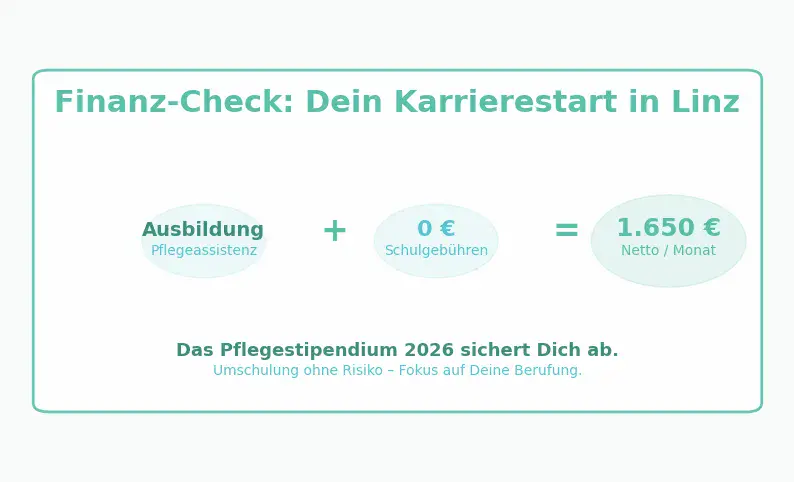
The noracares salary check: Why your earnings are higher with us
Many caregivers in Linz ask themselves: “What actually ends up in my account at the end of the month?” While traditional agencies often deduct high placement fees and administrative charges directly from your pay, noracares takes a different approach.
The direct comparison:
Example calculation: With a daily rate of 100 euros in 24-hour care, some agencies keep up to 20 percent as a service fee. With noracares, you negotiate your fee directly – your work is valued 100 percent.

In Linz, the field of private care offers a wide range of professions, each requiring specific qualifications and prerequisites. These include, on the one hand, solid training and, on the other hand, personal qualities:
Home elderly care
- Nursing training: In this field, a completed training program as a nursing assistant or geriatric nurse is usually required. In some cases, career changers with relevant experience and further training in elderly care can also work in this area.
- Certificates: Additional qualifications in areas such as dementia care or palliative care are an advantage. Certificates in first aid courses are also recommended.
- Basic medical knowledge: It is also important to be familiar with administering medication, monitoring vital signs, and general medical care practices. Only then can you get a picture of your patients’ state of health.
- Empathy and patience: Empathy and patience are crucial in order to meet the often complex and emotional needs of older people. Especially when illnesses such as dementia are present, you must be able to deal with people very patiently.
- Physical resilience: The physical fitness required to support mobility and daily activities should not be underestimated. You will often need to help older ladies and gentlemen up and support them.
Take Markus from Kleinmünchen as an example: After years in retail, he decided to train as a nursing assistant. Today he cares for Mr. Hofer, who has dementia. Markus knows: it is not only the medical tasks such as monitoring vital signs that matter. It is the patience when Mr. Hofer tells the same story for the fifth time, and the physical strength to help him safely out of his armchair. For Markus, the confirmation comes in the evening when he knows that, thanks to him, Mr. Hofer was able to spend a dignified day in his own home.
Disability support
- Nursing or social education training: As a rule, this support role requires training in nursing or social education, for example as a disability support specialist or comparable qualifications. Here too, career changers with relevant experience and further training may occasionally be employed.
- Specializations: Further training in special support methods, inclusive education, or behavior management can be beneficial depending on the needs involved.
- Individual support knowledge: You should have knowledge of special needs and support techniques for people with disabilities so that you can support those in your care accordingly.
- Flexibility and creativity: The ability to provide individual support and find creative solutions to everyday problems is also important.
- Communication skills: You should be able to communicate effectively both verbally and nonverbally and adapt to different communication needs.
- Physical resilience: Depending on the type and severity of the impairment, you may also need to provide physical support to those in your care. This requires physical fitness.
That disability support is far more than just assistance in everyday life is shown by the story of Sarah from Franckviertel. As a qualified social care worker, she supports young adults with impairments. Sarah uses her creativity to find individual solutions for everyday obstacles – whether through supported communication with tablets or planning inclusive leisure activities in Linz. For her, the job is a matter close to her heart: ‘It is about breaking down mental barriers and helping those in my care shape their lives as independently as possible.
Child and family care
- Training: Training in education, family care, or household management can be helpful, but is not absolutely necessary.
- Additional training: Courses in first aid, childcare, or nutrition can round out your profile and increase your attractiveness to families.
- Experience in childcare: Knowledge of caring for children, including educational and developmental psychology aspects, is an advantage. Experience in household management can also be relevant. This includes, for example, organizing and carrying out household tasks as well as supporting families in structuring their daily routines.
- Patience and organizational talent: Patience and organizational skills are especially important in order to meet the needs of children and families. But empathy and creativity are also important qualities.
For Lisa, it was clear: Her experience as a mother was her greatest asset. Even without formal educational training, she stood out through her organizational talent and empathy – qualities that families in Linz are desperately looking for.
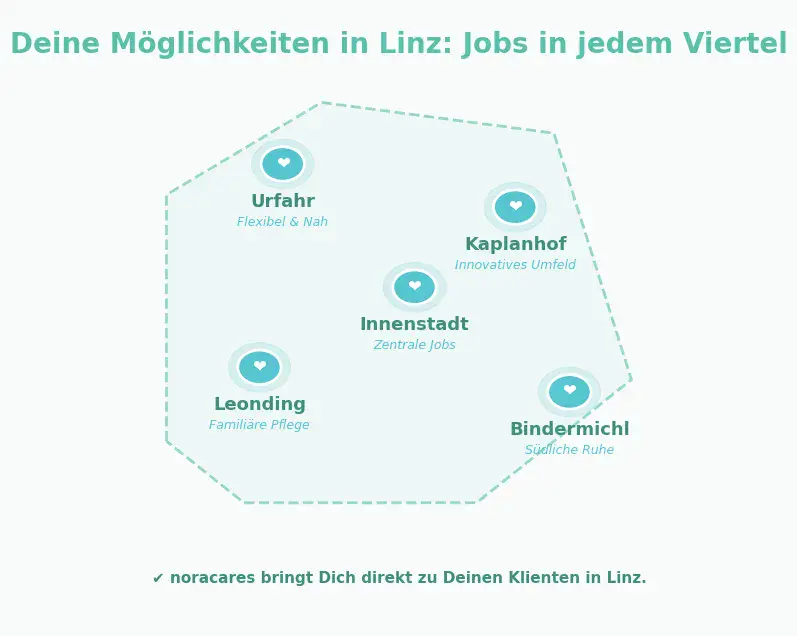
The demand for qualified care is spread across the entire city of Linz, but it has different focal points depending on the district. Through cooperation with local providers and private households, we know where the greatest opportunities for you currently lie:
- Urfahr & Pöstlingberg: There is particularly high demand here in private senior care and higher-end home care assistance in single-family homes.
- Bindermichl & Spallerhof: Due to the demographic structure in these traditional residential districts, many older people are looking for support so they can remain in their familiar surroundings for as long as possible (community nursing hotspots).
- Ebelsberg & SolarCity: As growing districts for young families, there is an enormous need here for flexible childcare, nannies, and substitute grandmothers who make it easier to balance work and everyday life.
- Franckviertel & Bulgariplatz: Here, the focus is increasingly on mobile care and disability support, supported by the excellent connections to Linz’s tram lines.

Once you have decided on a care field and meet the necessary requirements, the next step is to find a suitable position. You can browse job ads online, place an ad yourself, or register with noracares.
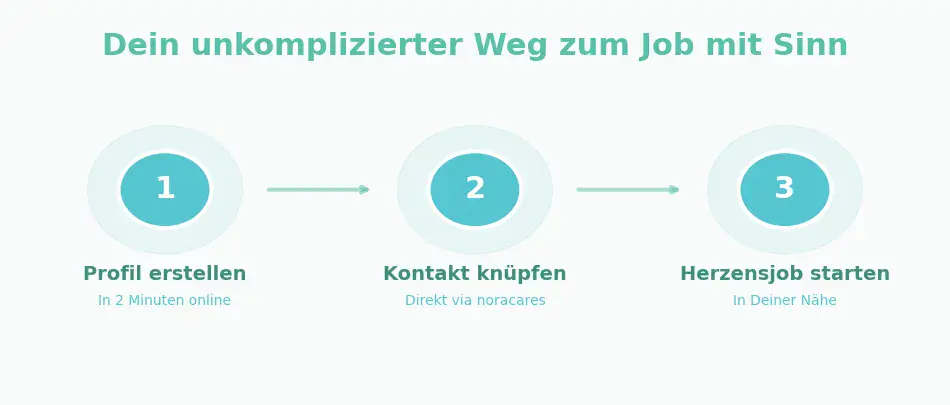
On the noracares platform, you will find not only a wide selection of job offers in Linz, but also extensive additional features. You have the option to filter your search results and get in touch directly with potential care recipients. In addition, as a caregiver, you benefit from a network of experienced colleagues as well as the supportive environment on the platform.
These resources make noracares a valuable point of contact for caregivers in Linz who are looking for new jobs in the care sector. Use these resources to find exactly the position that really suits you.

The application process for caregiver jobs in Linz requires careful preparation and a targeted approach. Here are some important steps and tips that can help you apply successfully:
Preparation of the application documents:
- Résumé: Make sure your résumé is clearly structured and up to date. Include relevant professional experience, especially in the care sector, in detail. Use clear headings and a tidy layout to highlight your qualifications and experience.
- Cover letter: Write an individual cover letter that makes your enthusiasm for the caregiver job and your motivation for wanting to work specifically in this field clear. Explain why you are interested in the specific role and job and what skills you can bring. Highlight knowledge that is particularly important for the respective caregiving role, such as medical knowledge for elderly care, educational skills for childcare, or special expertise in disability support. Also emphasize your social skills such as empathy and communication ability
- Relevant references: Attach all relevant references and certificates that prove your qualifications. These include proof of training, continuing education certificates, and references from previous employers. Make sure the documents are current and complete.
Interview:
Prepare for typical questions by reflecting on your experience and skills and giving concrete examples from your previous work. Think about answers to questions such as:
- “Why would you like to work in this field?”
- “What experience have you gained in caregiving?”
- “How do you deal with challenging situations?”
- “How do you organize your daily tasks and priorities?”
It is also important that you remain yourself. Show self-confidence and share something about yourself and your personality. After all, the interpersonal aspect is especially important in caregiving. Show interest in the position and in the person in need of care by asking targeted questions about the role, the expectations, and the person themselves.

As a caregiver in Linz, you have access to numerous local support services that make your professional daily life easier and promote your professional development.
The city of Linz provides a wide range of training and continuing education programs offered by various organizations and platforms, such as the Upper Austrian Public Employment Service (AMS) and the Upper Austrian adult education centers. These initiatives help caregivers expand their knowledge and always stay up to date.
There are also specialized advisory centers, such as the Counseling Center for Integration, which helps foreign care workers get their professional qualifications recognized and integrate into the labor market.
Another advantage in Linz and throughout Austria is the well-developed network of professional associations and representative bodies, including the Austrian Health and Nursing Association (ÖGKV), which offer you legal and professional support as a caregiver. In addition, in Austria you benefit from various social benefits and advantages that improve your financial stability and work-life balance. These include subsidies for further training, health promotion programs, and special offers to help balance work and family life. These support systems and benefits ensure that caregivers in Linz can not only practice their profession with professionalism and commitment, but also feel well supported and valued in the long term.
Whether you want to support families as a nanny or are looking for your calling as a home helper in elderly care – Linz offers ideal conditions for starting out in 2026. Demand is high in districts from Urfahr to Ebelsberg, and support for your path has never been more attractive.
Funding & qualifications: Your options
The path into care does not have to be a financial hurdle. Depending on the field, there is tailored support available in Linz:
- For aspiring care workers (home helper/care assistant): The care scholarship from AMS Upper Austria secures your livelihood during training with about 1,650 euros net per month. This allows you to fully focus on your new qualification at BFI or WIFI Linz.
- For family & childcare: Your experience and specific courses (e.g. child first aid) often matter here. Many families in Linz are specifically looking for committed personalities who bring flexibility and heart.
Your 3-step roadmap for Linz:
- Get oriented: Think about which care role suits you. A consultation at AMS Linz (Bahnhofplatz) can help you clarify funding such as the care scholarship.
- Build a network: Register on noracares at the same time. That way, you can immediately see which families or institutions in your neighborhood are looking for support.
- Take off: Since noracares deducts 0 euros in placement fees from your pay, the financial value of your work goes directly to you one-to-one – giving you more “net from gross” right from the start.

Linz offers you as a caregiver many opportunities to become professionally involved and continue developing. Elderly care, disability care, as well as family and childcare open up a wide range of care roles. Demand for qualified professionals is high, so there is something suitable for everyone.
At noracares, we understand: A job as a caregiver means more than just work. It is about responsibility, compassion, and daily commitment to people who need support. With us, you will find fair working conditions and a warm team that welcomes you respectfully and openly.
Linz gives you room to apply your skills, develop them further, and make a meaningful contribution. Take advantage of the many continuing education opportunities and local support systems to purposefully advance your career.
- Discover current job openings in Linz
- Learn everything about salary, working hours, and requirements
- Apply directly via our platform – find the job that truly suits you
Would you like to be informed immediately when a new job goes online in downtown Linz or Leonding? Register for free and activate your regional job filter.


- AMS (Public Employment Service Upper Austria): A regional institution that brings together job seekers and employers and often offers courses and support for career changers.
- Community Nursing: A modern care model in which qualified professionals act directly in Linz districts as the first point of contact for health questions and prevention.
- Qualified social care worker: A qualified professional who takes on not only care-related but also social and educational tasks, especially in disability or elderly care.
- Health Professions Register (GBR): The government register in Austria in which almost all nursing and health professions (e.g. care assistant, qualified social care worker) must register. This is where you receive your professional ID card.
- GuKG (Health and Nursing Care Act): The legal basis for all nursing professions in Austria. It precisely regulates who is allowed to perform which tasks (e.g. administering medication or changing dressings).
- Home helper: A care role that primarily provides support in the household and with basic care and is often a first step into elderly care.
- Klimaticket OÖ: An annual pass for all public transport in Upper Austria. Many employers in Linz provide this ticket in 2026 as a tax-free benefit.
- Résumé: A key document for applications that clearly presents all relevant professional experience, training, and skills.
- Nanny / childminder: A care role focused on the professional and often full-day care of children.
- ÖGKV (Austrian Health and Nursing Association): A professional association that supports nursing staff in Austria and offers them legal and professional guidance.
- Palliative care: Specialized care aimed at improving the quality of life of patients with severe, incurable illnesses through symptom relief.
- Care assistant: A care professional with state-recognized training who performs basic care tasks and supports qualified professionals.
- Care scholarship: Financial support from AMS for people in training (e.g. care assistant). It secures a livelihood with a fixed monthly amount (2026: approx. 1,650 euros).
- Career changer: A person who takes up a profession in nursing or care without formal prior training in this field, but often brings relevant life experience.
- Work-life balance: The balanced relationship between professional life, family, and leisure time – a key criterion for satisfaction in everyday care work.

